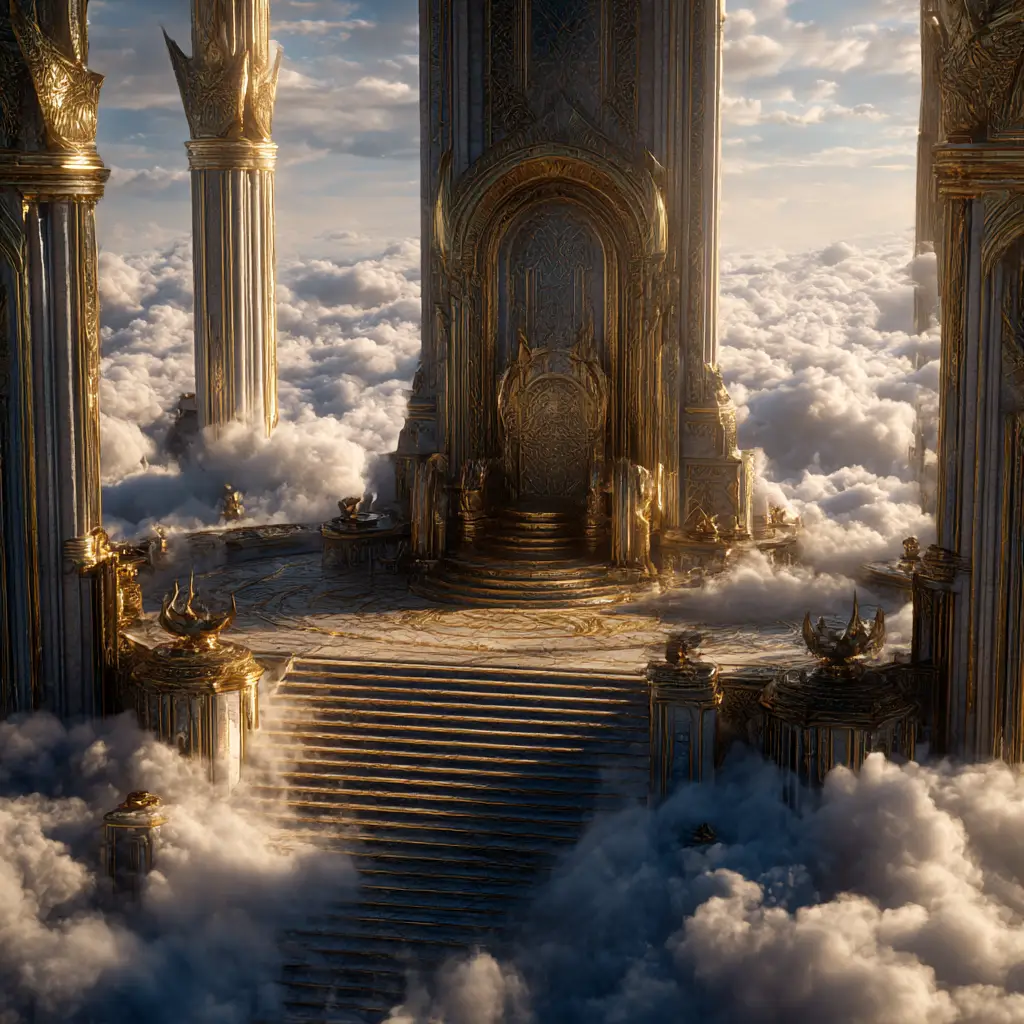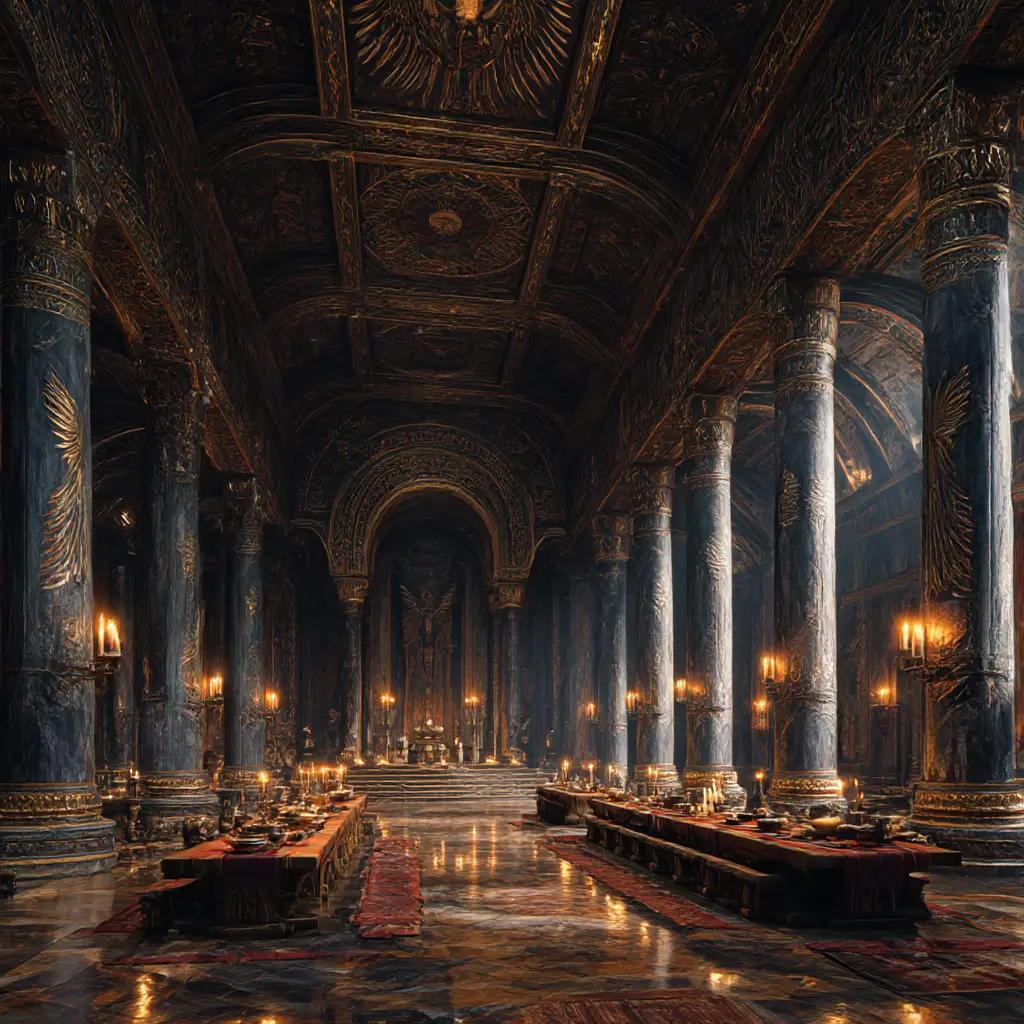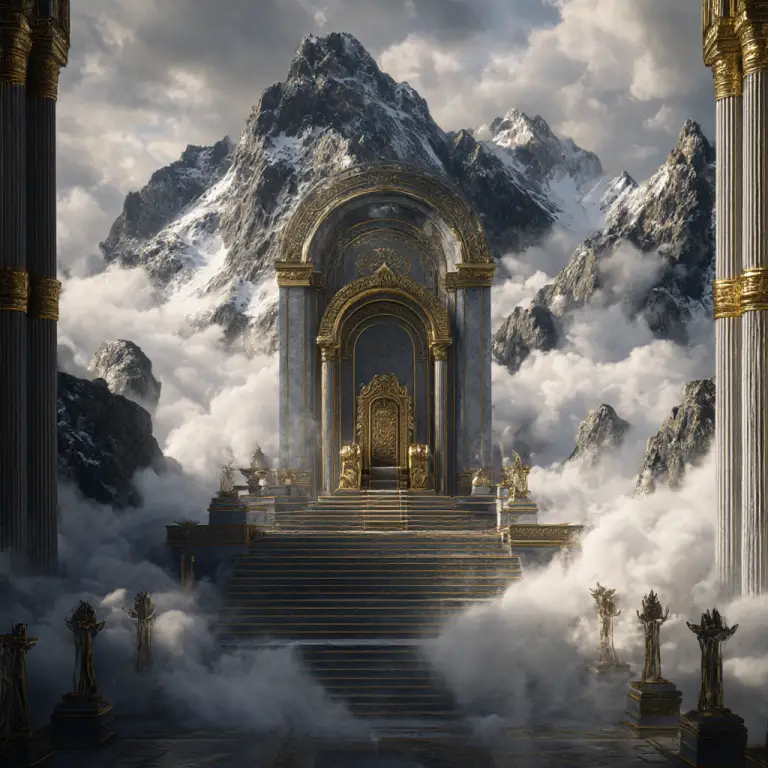
Valaskjalf is one of the great halls of Asgard in Norse mythology and is most closely associated with the god Odin. Although it is mentioned less often than Valhalla, Valaskjalf holds an important place in the mythological landscape as a symbol of wisdom, authority, and divine judgement. Its name is usually translated as “Shelf of the Slain” or “Shelf of the Slain Ones”, though interpretations vary, and it reflects Odin’s role as a god deeply concerned with knowledge, fate, and the dead.
According to the Prose Edda, Valaskjalf was built by the gods themselves and roofed with shining silver, a detail that sets it apart from other halls and gives it an atmosphere of solemn splendour rather than martial glory. This silver roof suggests clarity, insight, and a reflective quality, reinforcing the hall’s connection to wisdom rather than feasting or battle. Valaskjalf is not described as a place of celebration, but as a seat of observation and judgement.
Within Valaskjalf stands Hlidskjalf, Odin’s high seat. This is one of the most significant objects in Norse mythology. When Odin sits upon Hlidskjalf, he is able to see across all the Nine Worlds. From this vantage point, he observes the actions of gods, giants, humans, and other beings, gaining knowledge that shapes his decisions and strategies. The presence of Hlidskjalf makes Valaskjalf a centre of cosmic awareness, a place where the wider order of the universe can be surveyed and understood.
Valaskjalf also reflects Odin’s complex nature. While he is often remembered as a war god and the lord of Valhalla, he is equally a seeker of wisdom, willing to make great sacrifices for knowledge. The hall represents this quieter, more contemplative aspect of Odin. It is a place tied to foresight, governance, and the burden of knowing too much, rather than the heroic ideals associated with warriors and glory in battle.
In contrast to Valhalla, where fallen warriors feast and prepare for Ragnarök, Valaskjalf appears to function as a seat of rule and reflection. It is not populated by the einherjar, nor is it described as a gathering place for the dead. Instead, it stands as a divine hall of authority, reinforcing Odin’s position as Allfather and overseer of cosmic fate. This distinction helps illustrate the layered nature of Asgard, which contains spaces for celebration, warfare, judgement, and wisdom.
Valaskjalf’s relative scarcity in surviving sources has led to much interpretation and discussion among scholars and enthusiasts of Norse mythology. Some see it as an earlier or alternative conception of Odin’s hall that predates the more detailed development of Valhalla in later sources. Others view it as deliberately separate, emphasising the intellectual and sovereign aspects of Odin rather than his role as a chooser of the slain.
As a mythological location, Valaskjalf adds depth to the understanding of Norse cosmology. It reminds us that power in the Norse world was not based solely on strength and violence, but also on insight, memory, and the ability to see the wider pattern of events. Valaskjalf stands as a symbol of divine perspective, a quiet but formidable hall from which the fate of worlds could be observed and, to some extent, shaped.