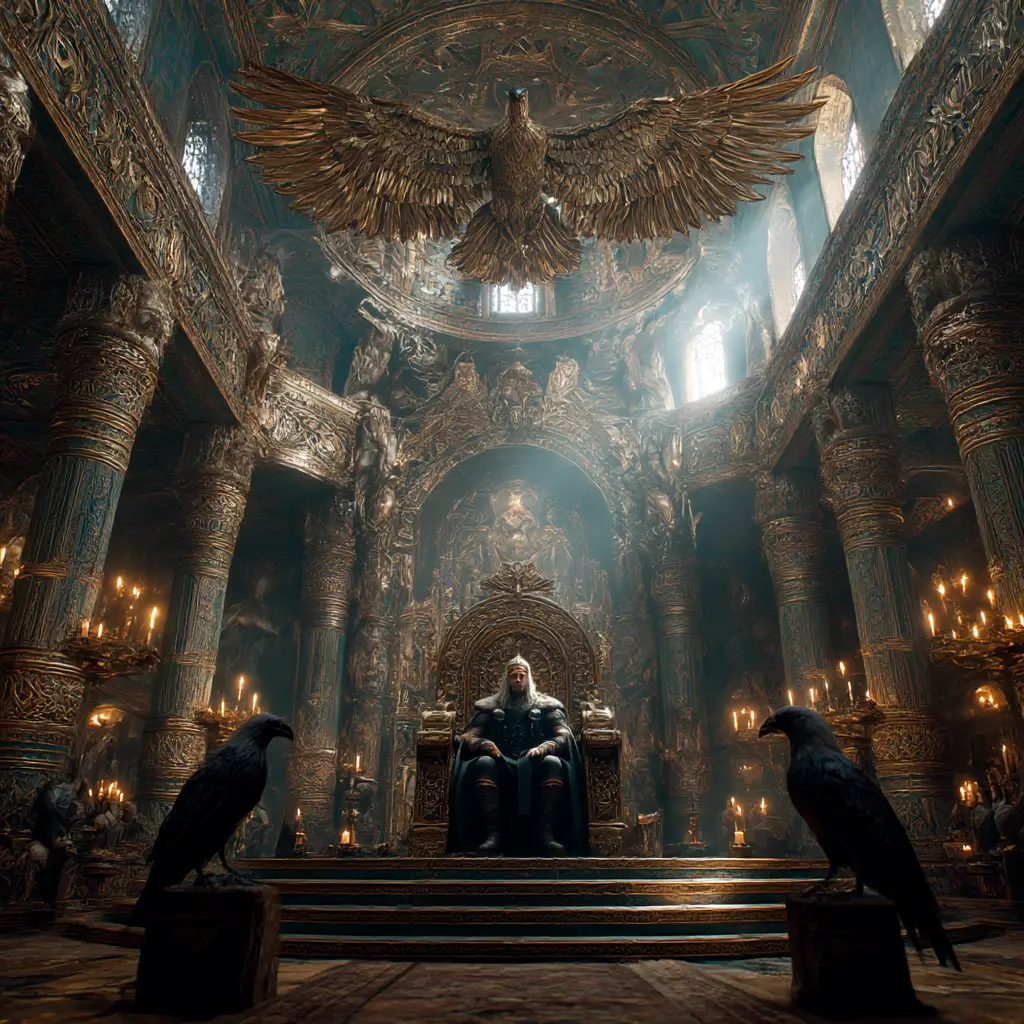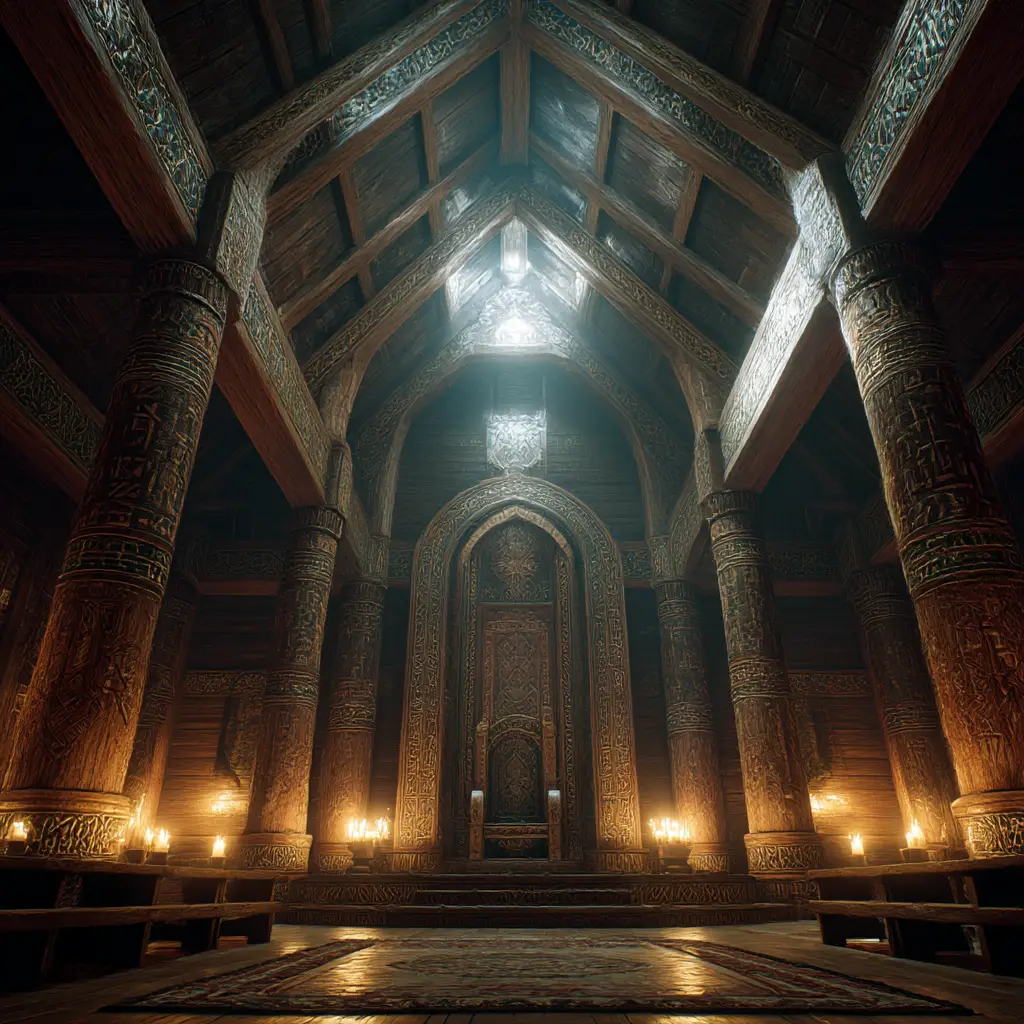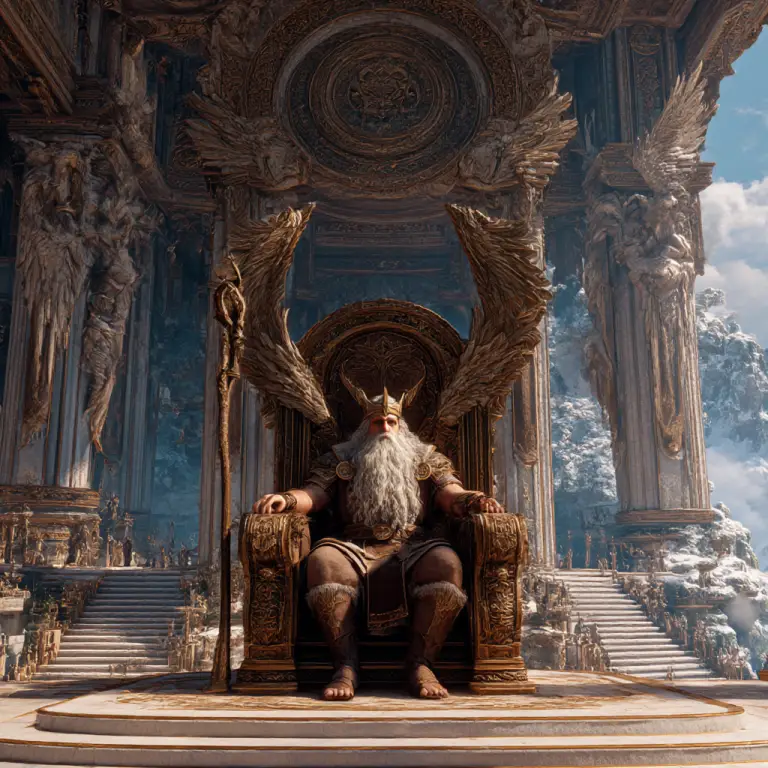
Gladsheim, often rendered as Gladsheimr in Old Norse, is one of the most important locations in Norse mythology and is closely associated with the Æsir gods. It is best known as the hall of Odin and a central place of governance and assembly within Asgard, the realm of the gods.
Gladsheim is described in the Poetic Edda and the Prose Edda as a grand and sacred hall where the Æsir meet to discuss matters that affect the cosmos. Its name is commonly translated as “bright home” or “place of joy,” reflecting both its splendour and its role as a seat of divine authority. Rather than being a feasting hall alone, Gladsheim functions more like a council chamber, emphasising wisdom, judgement, and order.
At the heart of Gladsheim stand the high seats of the gods, including Odin’s throne, Hlidskjalf. From Hlidskjalf, Odin can see across all the Nine Worlds, observing the actions of gods, giants, humans, and other beings. This ability reinforces Gladsheim’s role as a centre of oversight and strategy, where knowledge and foresight guide decision-making.
Gladsheim is also closely linked with Valhalla, the great hall of the slain. While Valhalla is often treated as a distinct location, some sources place it within or near Gladsheim. Valhalla serves a different purpose: it is the hall where Odin receives warriors who die bravely in battle, preparing them for Ragnarök. Gladsheim, by contrast, remains focused on governance rather than preparation for war, even though Odin’s interests connect both places.
The hall itself is portrayed as majestic and awe-inspiring. It is said to be built with craftsmanship beyond anything known in the human world, reflecting the divine status of its inhabitants. The gods gather there daily to hold councils, settle disputes, and determine the fate of both gods and mortals. This regular assembly highlights the Norse emphasis on law, custom, and collective decision-making, values that were also central to Viking-age society.
In mythological geography, Gladsheim is part of Asgard, which is connected to Midgard, the world of humans, by the rainbow bridge Bifröst. This connection symbolises the relationship between gods and humanity, with Gladsheim acting as a place where the gods consider human affairs and intervene when necessary.
Gladsheim’s importance extends beyond its physical description. Symbolically, it represents order in a cosmos that is constantly threatened by chaos, particularly from the giants of Jötunheim. The councils held there are attempts to maintain balance and delay the destruction foretold at Ragnarök. Even though the gods know their fate is sealed, Gladsheim stands as a testament to their commitment to duty and responsibility.