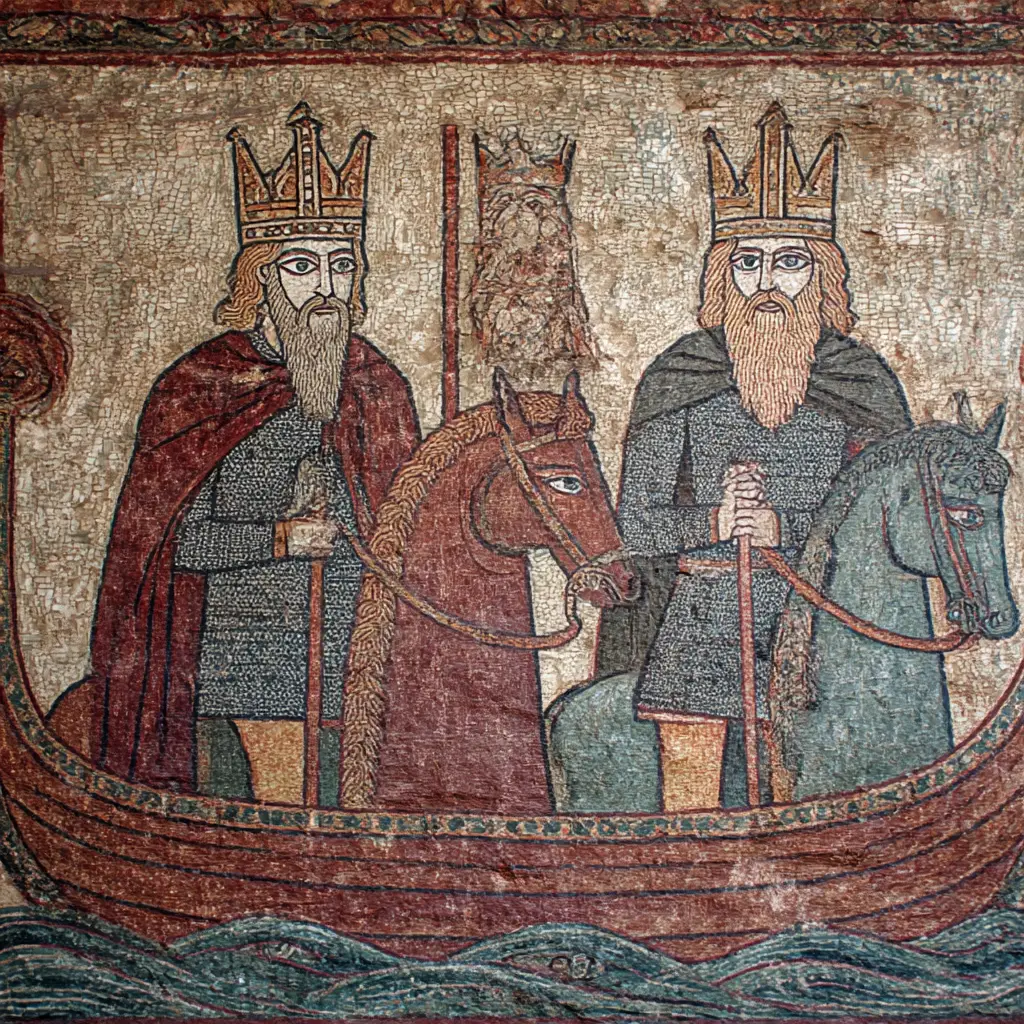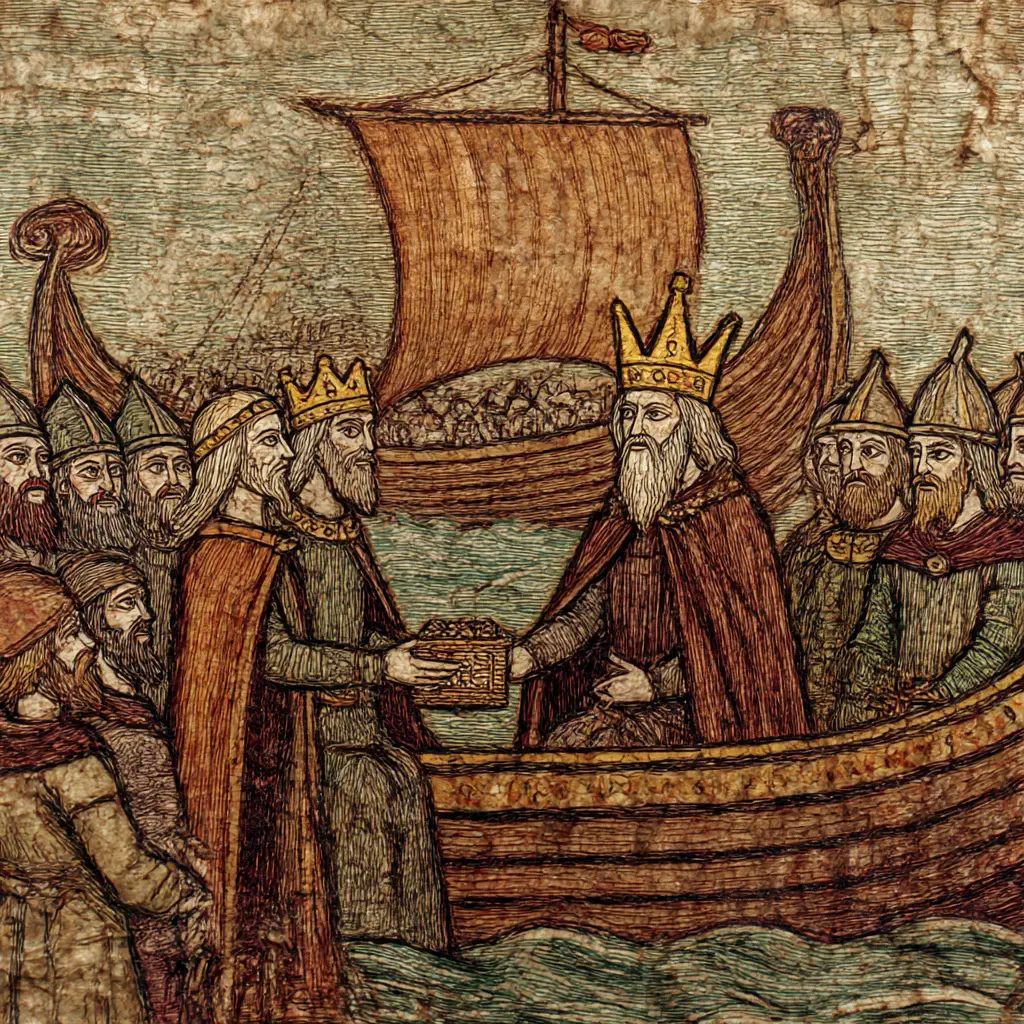
The Orkneyinga Saga is one of the most important narrative sources for understanding power, conflict, and governance in the Norse world of the North Atlantic. Written in Iceland in the early 13th century, it records events that took place mainly during the 10th and 11th centuries, focusing on the Earldom of Orkney. At this time, Orkney was a strategic hub linking Scandinavia, Scotland, Ireland, and the wider Viking world. Control of the islands meant control of sea routes, tribute, and political influence, and this made the earldom a frequent site of violent rivalry.
Political Structure and Authority in Orkney
During the 10th and 11th centuries, Orkney was ruled by earls of Norse origin who were formally subject to the kings of Norway. In practice, however, the earls exercised a high degree of independence. Power was personal rather than institutional, grounded in lineage, military strength, alliances, and the ability to reward followers. Succession was rarely straightforward. Multiple heirs could claim authority at once, and shared rule was common, often leading to tension and open conflict.
The saga presents Orkney as a society where authority depended on reputation and action. An earl was expected to defend his lands, pursue vengeance when wronged, and maintain loyalty among his supporters. Failure in any of these areas weakened a ruler’s position and invited challenge.
Family Rivalries and Divided Rule
One of the defining features of Orkney’s political life in this period was the recurrence of joint earldoms. Brothers, cousins, or half-brothers frequently ruled together, either by agreement or by force. While this arrangement could provide temporary stability, it often collapsed into rivalry. The saga records repeated cycles of uneasy cooperation followed by betrayal, assassination, or outright warfare.
These conflicts were rarely limited to Orkney itself. Rival earls sought backing from powerful figures in Norway or Scotland, drawing external politics into local disputes. A claimant with royal support could legitimise his position, but this also increased dependence on foreign rulers and exposed Orkney to wider political pressures.
Violence, Law, and Negotiation
The Orkneyinga Saga portrays a world where violence was an accepted and often expected part of political life. Killings, raids, and ambushes are common, especially during succession disputes. At the same time, law and negotiation played a significant role. Assemblies were used to settle claims, divide territory, and formalise agreements, even if such settlements were later broken.
This tension between violence and legal process reflects a society in transition. Traditional Norse customs emphasised personal honour and revenge, but growing Christian influence and closer ties with Scandinavian and Scottish kingdoms encouraged more structured forms of governance. The saga captures this shift without presenting it as smooth or inevitable.
Norwegian Kings and External Influence
Norwegian kings loom large in the power struggles of the 10th and 11th centuries. Royal intervention could confirm an earl in his position or remove him entirely. Some earls spent time at the Norwegian court, cultivating favour and reinforcing their legitimacy. Others resisted royal authority, asserting their independence through military strength or alliances elsewhere.
Scottish influence also increased during this period, particularly in the southern isles and Caithness. The saga shows Orkney caught between competing spheres of power, with its rulers navigating a complex political landscape to preserve their status.
Legacy of the Power Struggles
The power struggles recorded in the Orkneyinga Saga shaped the development of the earldom and its relationship with neighbouring realms. Repeated conflict weakened some ruling families while elevating others, gradually narrowing the field of claimants. By the late 11th century, authority in Orkney had become more consolidated, though never entirely secure.
As a historical source, the saga offers a detailed and often stark account of leadership in a Viking-age society. It presents power not as a fixed institution, but as something constantly negotiated through kinship, force, loyalty, and political skill. This makes it an invaluable window into the realities of rule in the North Atlantic world during a turbulent and formative period.