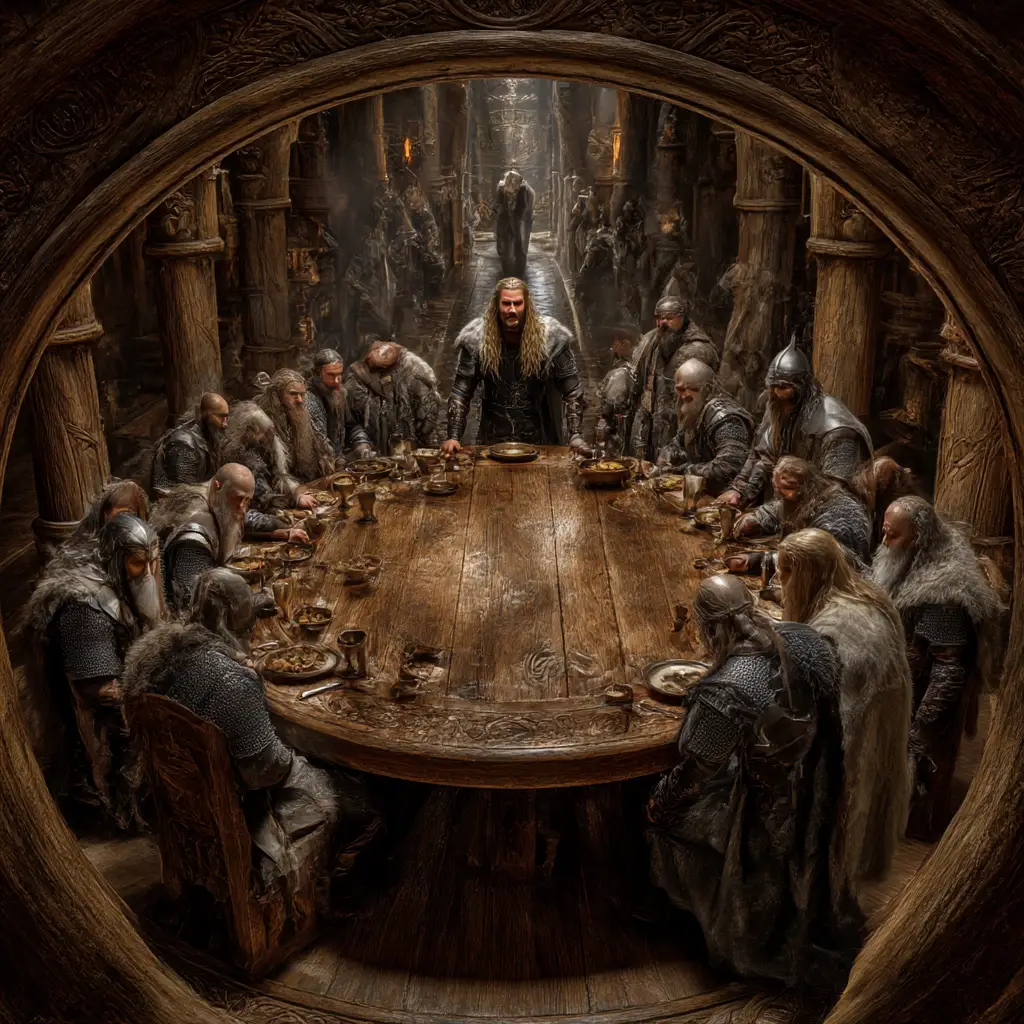
Friday the 13th is widely regarded as an unlucky day in modern culture, often associated with superstition, misfortune, and ominous events. While the fear surrounding the date has evolved over centuries and across different cultures, one of the most commonly cited mythological connections comes from Norse tradition. Although the link between Norse mythology and Friday the 13th is not firmly rooted in historical evidence, a popular story involving the gods of Asgard has played a major role in shaping the legend.
The Banquet of the Gods
According to the story often associated with Norse mythology, twelve gods were gathered for a feast in Valhalla, the great hall of the slain warriors. These gatherings were meant to be grand occasions filled with food, drink, and celebration among the divine beings of the Norse world.
The harmony of the gathering was disrupted when a thirteenth guest arrived uninvited. This guest was the trickster god Loki, known for his cunning nature and unpredictable behaviour. Loki’s presence at the feast quickly led to tension and conflict among the gods.
During the gathering, Loki tricked Höðr, the blind god, into shooting a mistletoe-tipped spear or arrow at his brother Baldr. Baldr was beloved by the gods and considered nearly invulnerable because his mother, Frigg, had secured promises from almost every object in the world not to harm him. However, mistletoe had been overlooked.
The weapon struck Baldr and killed him instantly. His death brought immense grief to the gods and disrupted the balance of the world. In later interpretations of the story, the arrival of Loki as the thirteenth guest at the feast became associated with the idea that thirteen people gathered together could lead to tragedy.
Baldr and the Symbolism of Loss
Baldr’s death is one of the most famous and tragic events in Norse mythology. He was often described as wise, gentle, and radiant, a symbol of light and goodness among the gods. His death marked a turning point in the mythological timeline, foreshadowing the coming of Ragnarök, the final battle that would lead to the destruction and rebirth of the world.
The sorrow that followed Baldr’s death was profound. The gods attempted to bring him back from the realm of the dead, but their efforts failed due to Loki’s interference. This deepened Loki’s reputation as a bringer of chaos and ensured that his role in the story would be remembered for generations.
The Meaning of Friday
The “Friday” in Friday the 13th also has a possible connection to Norse belief. The name of the day is often linked to the goddess Frigg, the wife of Odin and the mother of Baldr. Frigg was associated with wisdom, foresight, love, and family. Some traditions also connect the day with the goddess Freyja, another powerful female figure linked to fertility, magic, and beauty.
Over time, as Christianity spread through Northern Europe, some pagan figures and traditions were reinterpreted or cast in a negative light. This cultural shift may have contributed to the idea that Friday, once associated with powerful goddesses, became linked with misfortune.
The Number Thirteen
The number thirteen itself has long been considered unusual or disruptive in various cultures. In Norse storytelling, the idea of a thirteenth guest bringing chaos fits neatly with Loki’s role as the unpredictable outsider.
However, it is important to note that the Vikings themselves did not appear to hold a widespread fear of the number thirteen. The association between thirteen and bad luck likely developed much later in European folklore.
Myth, Tradition, and Modern Superstition
The connection between Friday the 13th and Norse mythology is therefore best understood as part of a broader tradition of storytelling. The tale of Loki arriving uninvited at a gathering of the gods offers a dramatic narrative that neatly explains why the number thirteen might be seen as troublesome.
Whether or not the Vikings themselves believed in the superstition, the story continues to capture the imagination. It combines familiar themes from Norse myth such as fate, trickery, and the fragile balance between order and chaos.
Today, Friday the 13th remains a curious blend of myth, folklore, and modern superstition. For some it is a day to avoid ladders, black cats, and questionable decisions. For others, it is simply another reminder that old stories have a remarkable ability to survive, evolve, and occasionally make us glance twice at the calendar.