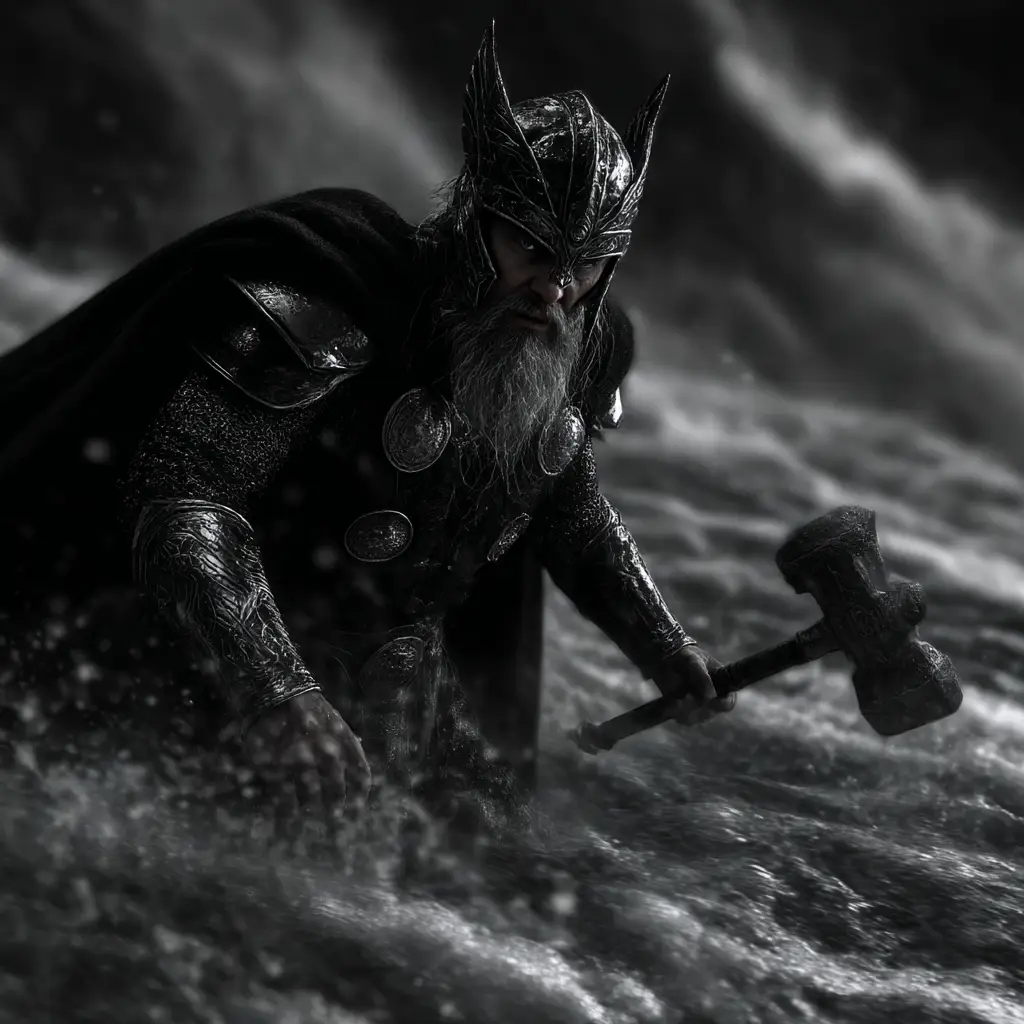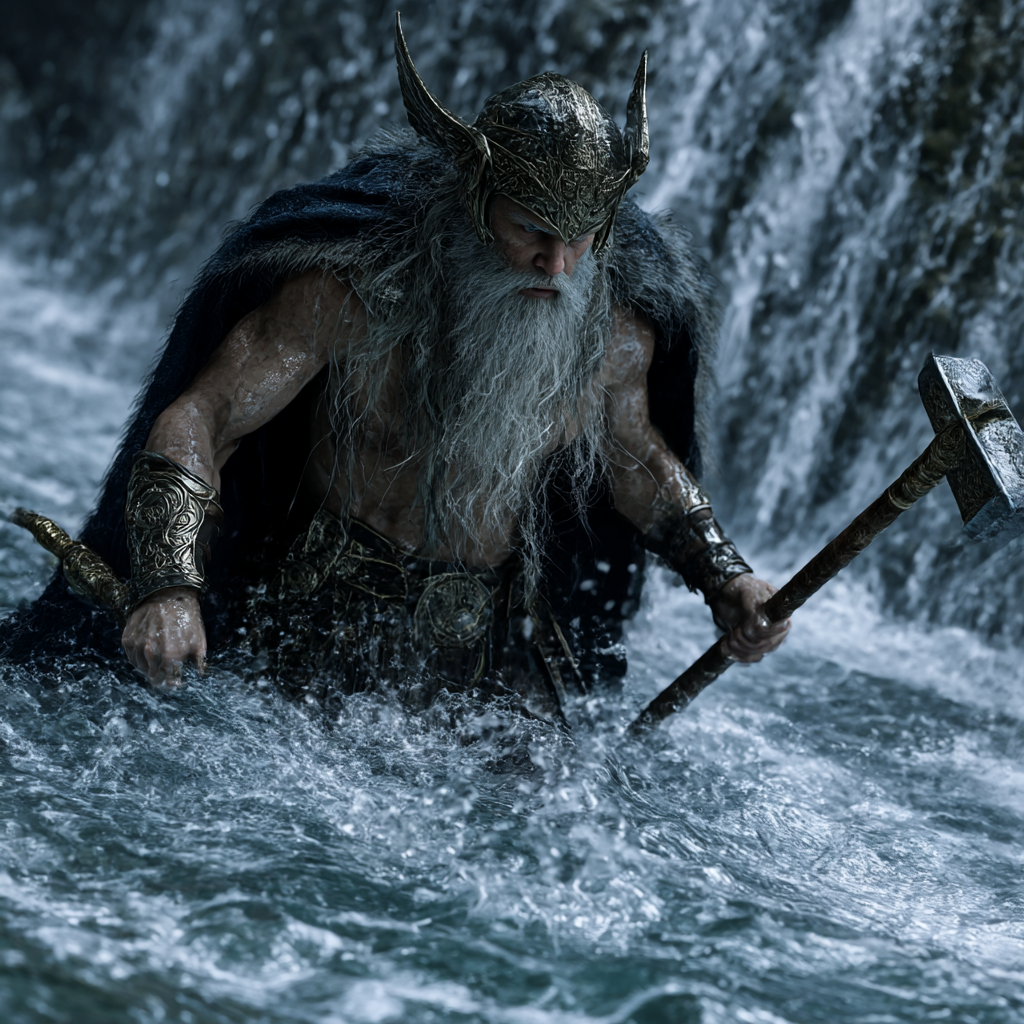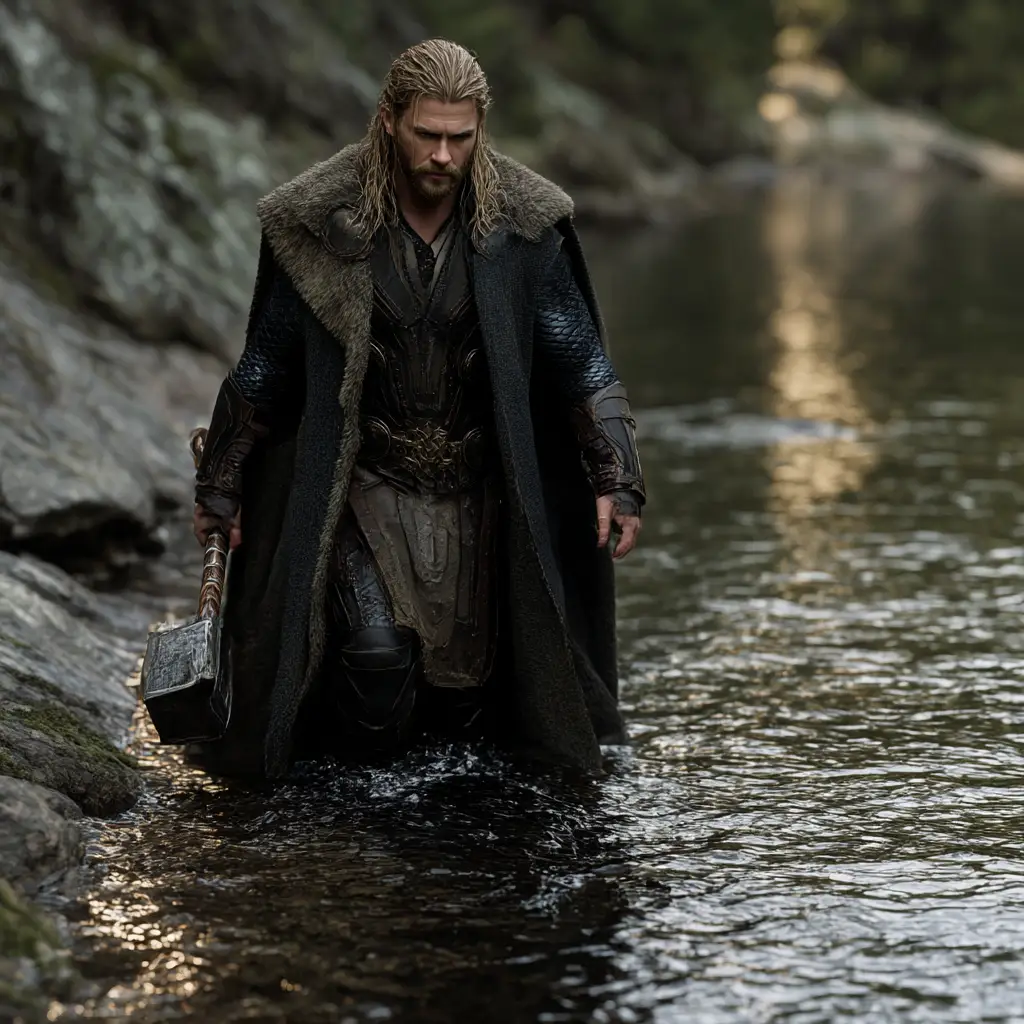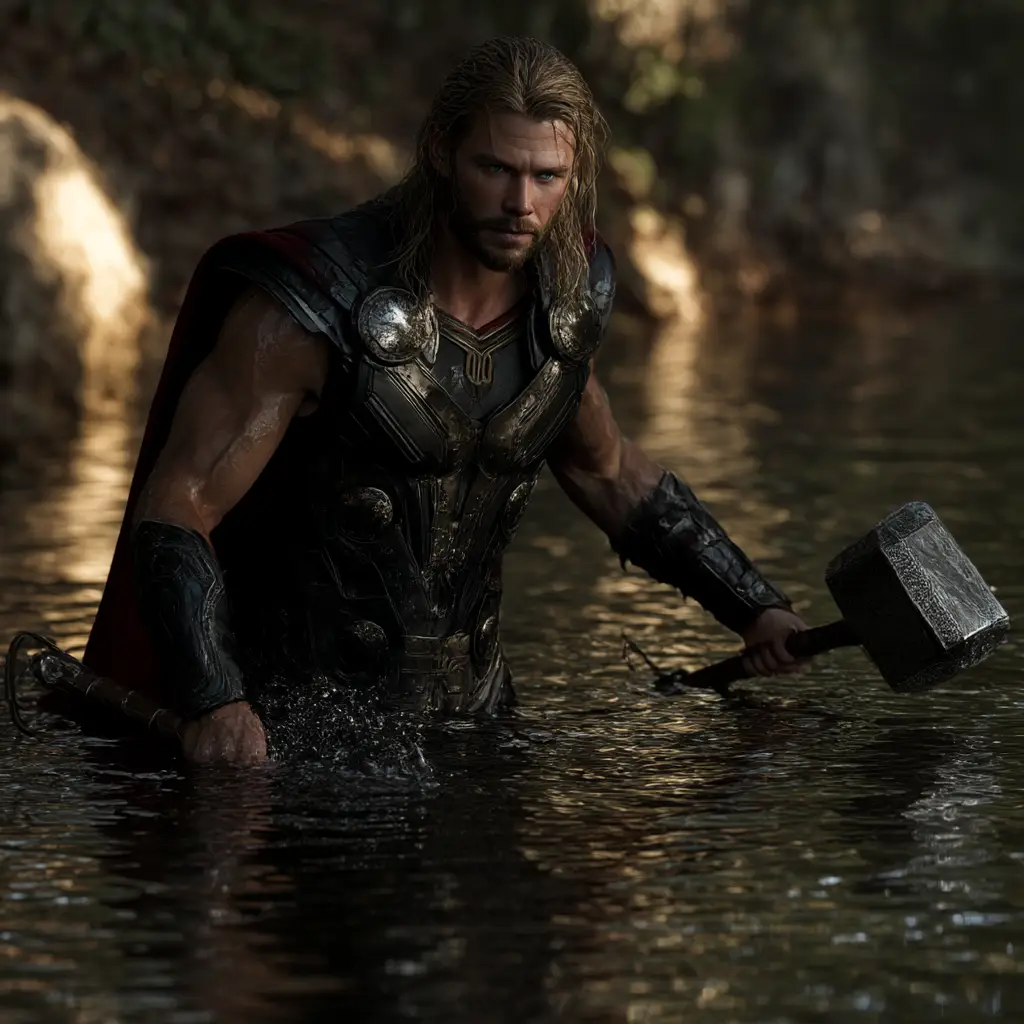
“Thor Will Wade Four Rivers Every Day”
The line “Thor will wade four rivers every day” comes from the Old Norse poem Grímnismál, preserved in the Poetic Edda. At first glance it feels like a simple, almost throwaway detail about the daily routine of a god. Look closer, though, and it opens a window into how the Norse understood power, hardship, and the nature of their gods.
The Passage and Its Meaning
In Grímnismál, a disguised Odin lists the dwellings of the gods and various features of the mythological world. When he speaks of Thor, he notes that the thunder god must wade through four rivers every day on his way to the divine court at Yggdrasil. Unlike other gods who may cross by bridge, Thor goes on foot, through water, again and again.
This is not because Thor is lesser. It is because he is different.
Thor is the protector of both gods and humans, constantly engaged in keeping chaos at bay. His enemies are not abstract forces but physical beings—giants, monsters, and creatures tied to the wild edges of the world. His journey reflects that role. While others reside comfortably within the ordered space of the gods, Thor moves between boundaries.
The Rivers Themselves
The poem names the rivers Thor must cross: Körmt, Örmt, and the two Kerlaugar. Their exact meanings are debated, but they are typically understood as dangerous, cold, or fast-flowing waters. In Norse thought, rivers often marked transitions—between worlds, between states of being, or between safety and danger.
Thor crossing them daily suggests a constant negotiation with those boundaries. He is not removed from the harshness of existence; he is immersed in it.
Why Thor Walks Instead of Riding
One of the more intriguing details is that Thor does not simply ride across these rivers, even though he possesses a chariot pulled by goats. The implication is that the sacred bridge, Bifröst, cannot bear him. Whether due to his immense strength or his association with storm and disruption, Thor takes a more direct, physical route.
There is a quiet logic here. Thor is not a distant ruler or a god of subtle influence. He is the embodiment of force applied directly. Walking through rivers rather than gliding above them fits that character perfectly.
A Glimpse of Norse Values
This small detail reflects a broader pattern in Norse mythology. The gods are powerful, but they are not insulated from effort or danger. Even Thor, arguably the strongest among them, performs a daily task that is repetitive, demanding, and unavoidable.
It mirrors the lived experience of the people who told these stories. Survival in the Viking Age meant constant labour and exposure to the elements. Strength was not about avoiding hardship but enduring it.
Thor’s daily crossing becomes symbolic of reliability. He does the work every day, without exception. Protection is not a single act of heroism; it is a continuous responsibility.
Thor in Context
Within the wider mythological landscape, Thor stands apart from figures like Odin. Where Odin seeks knowledge, often through sacrifice and cunning, Thor represents stability and defence. He is predictable in the best sense—dependable, direct, and unwavering.
The image of him wading rivers reinforces that identity. He is always on the move, always between places, always engaged in the effort required to keep order intact.
Enduring Appeal
The line endures because it humanises a god without diminishing him. There is something recognisable in the idea of a daily journey that cannot be skipped. It grounds Thor in a rhythm that feels almost ordinary, even as the setting remains mythic.
In that tension—between the everyday and the divine—the world of Norse mythology reveals one of its core truths: even the gods are shaped by the same relentless currents that define the world itself.