In Norse mythology, the river Leiptr is one of the many powerful and often ominous waterways that flow through the mythological cosmos. It is most commonly associated with the boundary regions of the underworld and appears in sources that describe the perilous journey towards Hel, the realm of the dead.
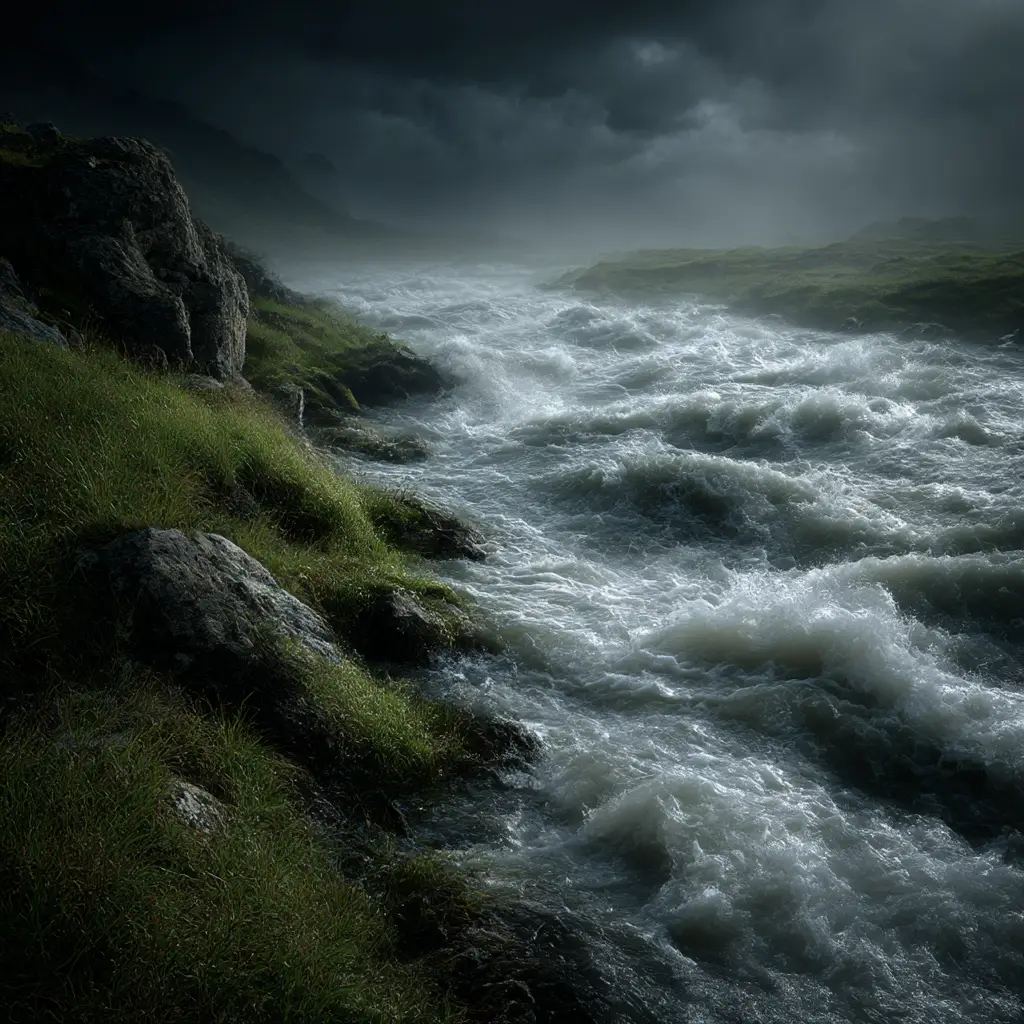
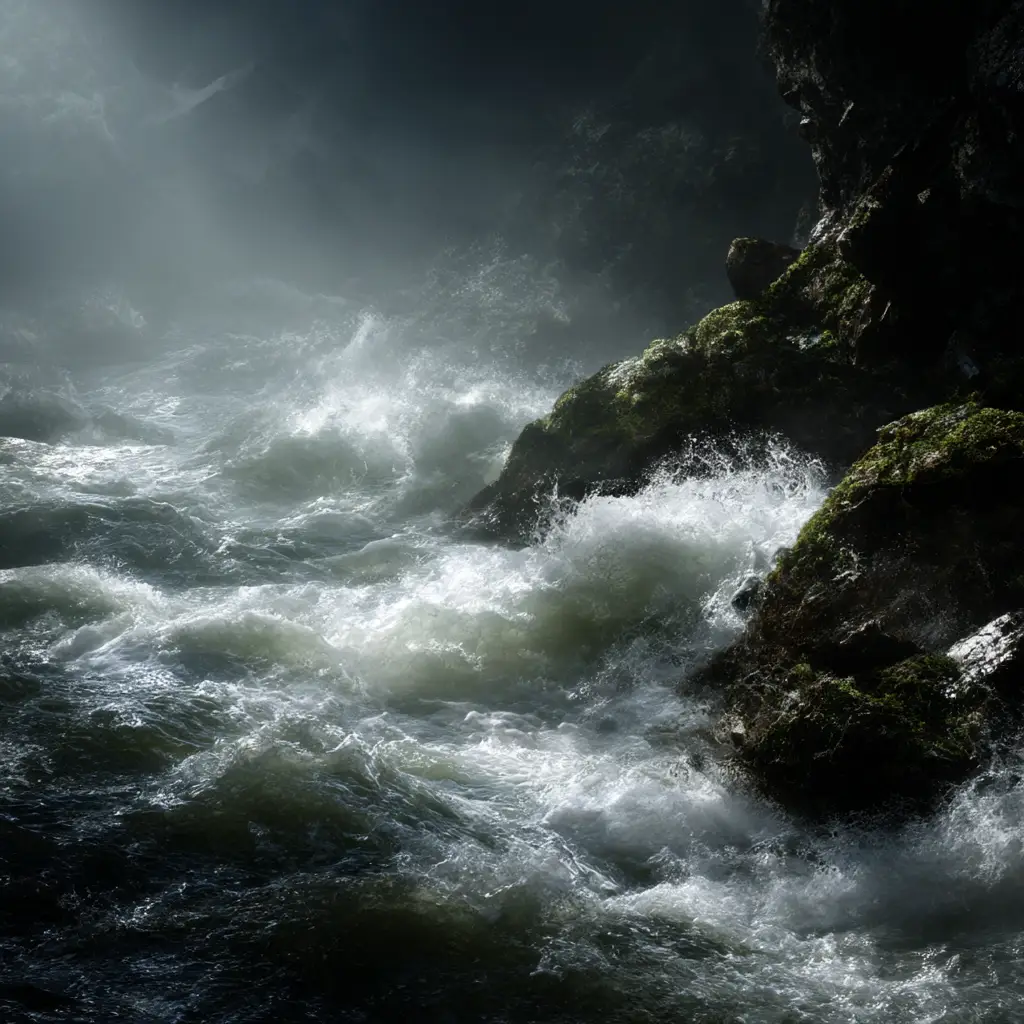
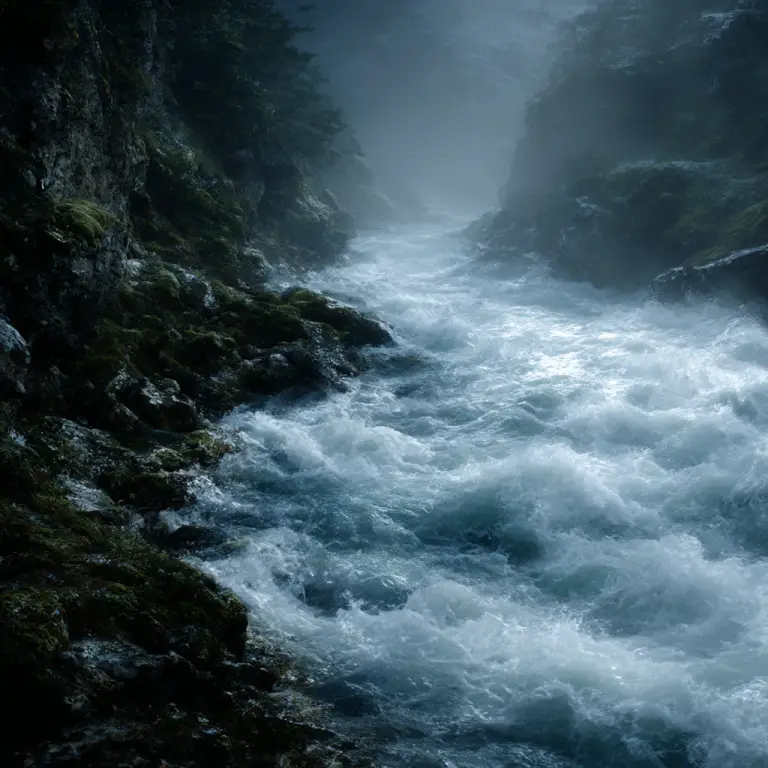
Leiptr is mentioned in Old Norse literature as a river that must be crossed by those travelling into the deeper regions of the afterlife. Its name is often interpreted as meaning something akin to “flashing” or “lightning”, suggesting a river that is not calm or gentle, but violent and charged with energy. This fits with the wider portrayal of rivers in Norse cosmology, which frequently act as barriers, testing points, or symbolic divisions between worlds.
The river is closely linked with Hel, the domain ruled by the goddess of the same name. Unlike the more heroic afterlife of Valhalla, Hel was the destination for those who died of illness, old age, or other non-heroic causes. The journey there was not presented as a peaceful passage. Instead, it involved traversing dark landscapes, crossing dangerous rivers, and passing through guarded thresholds. Leiptr stands as one of these obstacles, reinforcing the idea that death in Norse belief was a transition marked by challenge and separation.
In some interpretations, Leiptr forms part of a wider network of rivers that originate from the primordial wellspring of Hvergelmir. This source, located beneath one of the roots of the world tree Yggdrasil, feeds numerous rivers that flow into different realms. These waters are not life-giving in the usual sense. Rather, they are often associated with cold, decay, and the harsh realities of existence. Leiptr, with its suggested association with lightning or sudden force, adds a more volatile dimension to this network.
Rivers such as Leiptr also had a symbolic function. In a culture where travel by water was central to daily life, rivers represented both connection and danger. They could sustain communities, but they could also isolate and threaten. In myth, this dual nature is heightened. Leiptr becomes more than a physical feature; it is a boundary between states of being. To cross it is to move from the world of the living into a realm where the familiar rules no longer apply.
Although Leiptr does not feature in detailed narrative myths in the same way as some other elements of Norse cosmology, its presence contributes to the overall atmosphere of the mythological landscape. It reflects a worldview in which the journey after death is uncertain and, at times, formidable. The river stands as a reminder that the Norse conception of the afterlife was not simply divided between reward and punishment, but was instead a complex and often stark continuation of existence beyond death.
Today, Leiptr is a lesser-known element of Norse mythology, yet it remains an evocative example of how the Norse imagined the unseen world. Through brief but powerful references, it conveys a sense of movement, danger, and transition, capturing the essence of a belief system deeply connected to both the natural environment and the inevitability of death.