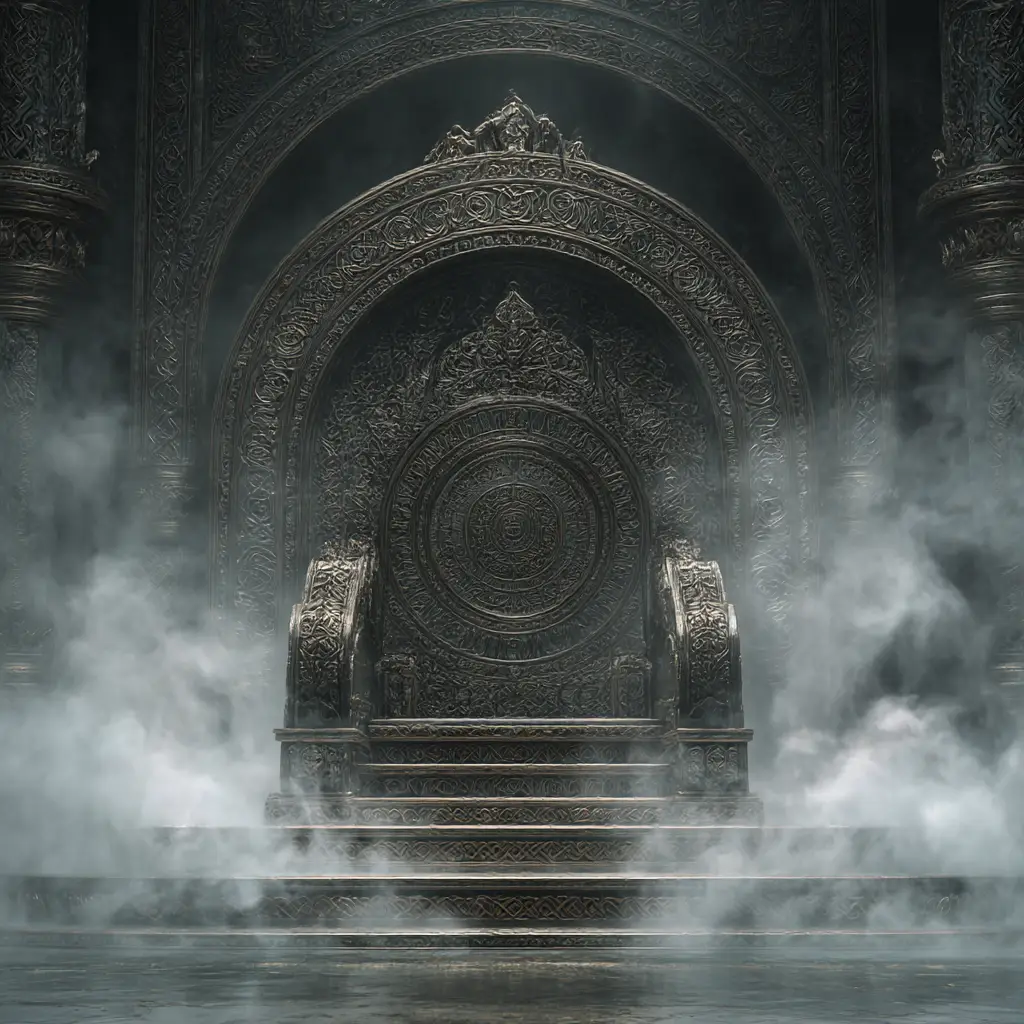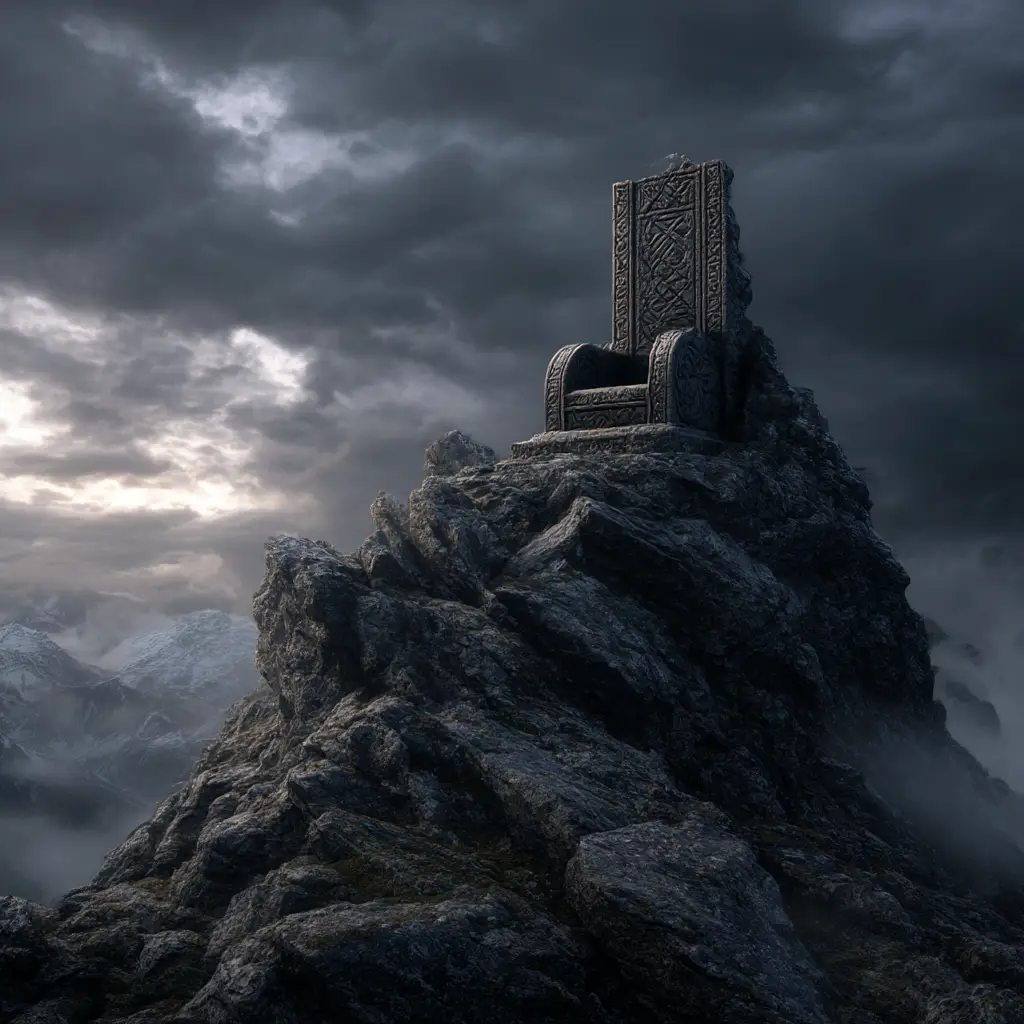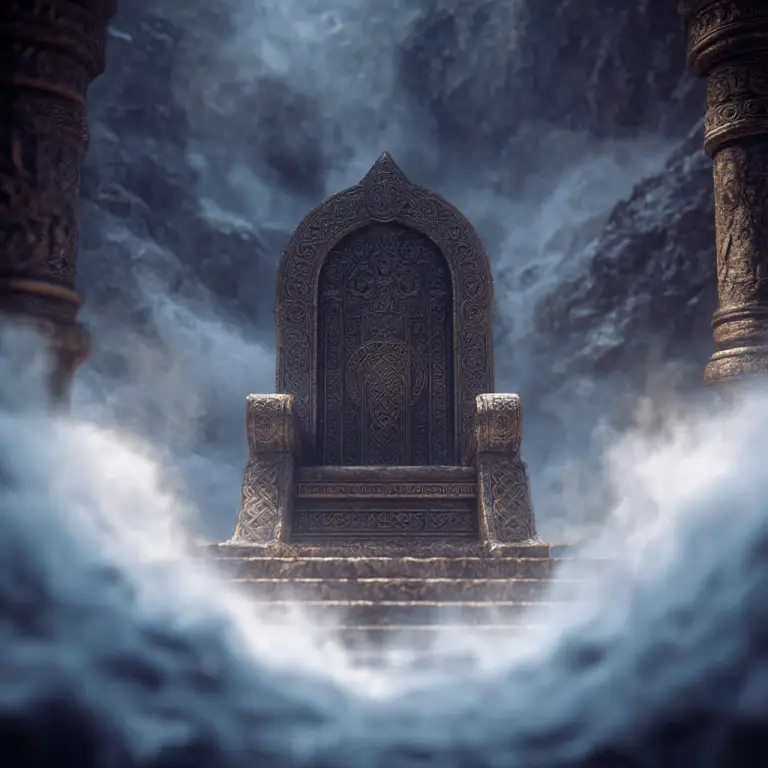
Hlidskjalf is one of the most notable features associated with the god Odin in Norse mythology and is described in the sources as a high seat located in Asgard, the realm of the Aesir gods. The name Hlidskjalf is generally understood to derive from Old Norse elements meaning something like “open” or “slope” combined with “seat” or “bench”, indicating an elevated place intended for sitting rather than an enclosed structure. It is consistently presented as a fixed seat rather than a throne in the later medieval sense, emphasising its function as a vantage point within the divine world.
The earliest written references to Hlidskjalf come from Old Norse literary sources recorded in Iceland during the 13th century, most notably the Poetic Edda and the Prose Edda. These texts preserve older oral traditions that were part of the shared mythological culture of the Scandinavian world during the Viking Age. In these accounts, Hlidskjalf is closely linked to Odin’s role as the chief of the Aesir and as a god deeply concerned with knowledge, observation, and oversight of the Nine Worlds.
Hlidskjalf is described as being situated in Asgard, among the halls of the gods. In some passages it is treated as part of Odin’s own hall, Valaskjalf, which is said to be roofed with shining silver. From this location, Hlidskjalf stands apart as a specific seat rather than the hall itself. The distinction is important in the mythological texts, which often focus on the act of sitting upon Hlidskjalf as a deliberate and significant action, sometimes restricted and at other times temporarily permitted.
Several myths recount episodes in which Odin sits upon Hlidskjalf, and in doing so gains awareness of events taking place across the worlds. In the Prose Edda, Snorri Sturluson explains that when Odin occupies this seat, nothing remains hidden from his sight. This ability is not described as automatic or constant, but as something activated by Odin’s presence on Hlidskjalf, reinforcing the idea that the seat itself has a specific and recognised function within the cosmology.
Hlidskjalf also appears in stories involving other gods. One well-known episode describes how Frigg, Odin’s wife, sits with him upon Hlidskjalf and observes events unfolding among humans. Another tale recounts how the god Loki once sat on Hlidskjalf without Odin’s permission, an act that leads to consequences and conflict. These narratives underline that access to Hlidskjalf is limited and that its use is bound by divine authority and social order among the gods.
The seat is not associated with craftsmanship, weapons, or material wealth in the surviving texts. Instead, it is consistently portrayed as static and enduring, an established part of the divine landscape rather than an object that is made, lost, or destroyed. Unlike many mythological items that pass between owners or are won and lost, Hlidskjalf remains firmly anchored in Asgard and tied to Odin’s position among the Aesir.
In the wider context of Norse myth, Hlidskjalf helps to define the structure of the gods’ world and the way knowledge and awareness are distributed among them. Its repeated appearance across multiple sources suggests that it was a well-known concept in pre-Christian Scandinavian storytelling. While the medieval authors who recorded these myths were writing centuries after their origins, the consistency of Hlidskjalf’s description points to a long-standing tradition.