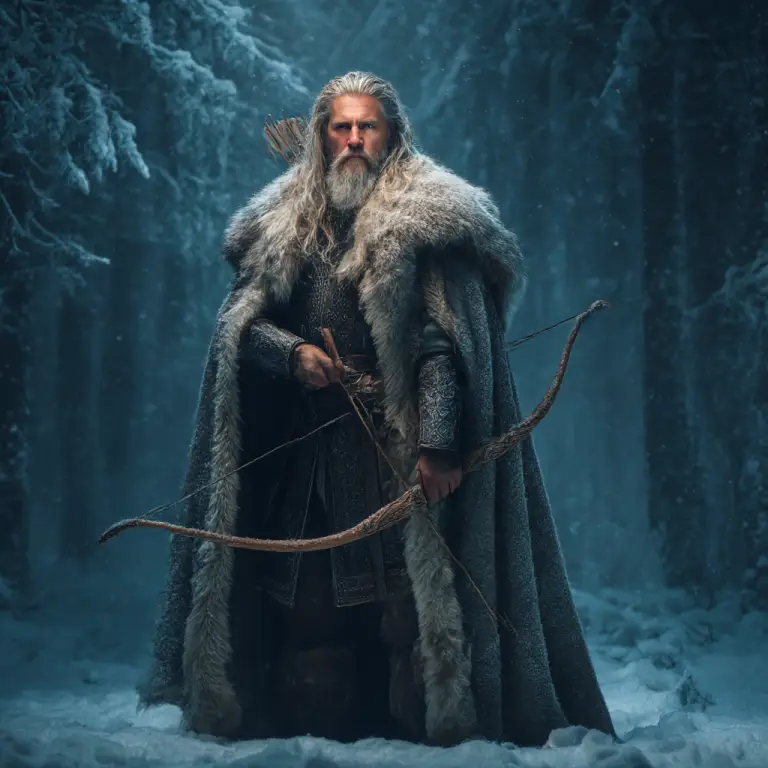
Ullr is a lesser known but important god in Norse mythology, closely associated with winter, hunting, archery, skiing, and the skills needed to survive in harsh landscapes. Although he does not appear as frequently in surviving myths as gods like Odin or Thor, the evidence that does exist suggests he was once widely revered, particularly in regions where snow, forests, and mountains shaped everyday life.
Ullr is described as the son of Sif and the stepson of Thor. His father is not named in the surviving sources, which has led some scholars to suggest that Ullr may originate from an older tradition that predates the prominence of the Æsir gods as we know them. His name likely derives from a Proto-Norse word meaning glory or splendour, hinting at an earlier, possibly more central role in religious belief.
He is most strongly linked to winter and snow. Ullr is famed as a master skier, so skilled that he could travel swiftly and silently across frozen landscapes where others would struggle to move at all. Skis in the Viking Age were not recreational objects but essential tools for transport and hunting, and Ullr embodies this practical mastery of the winter world. Alongside skiing, he is also renowned as an exceptional archer. Bows were vital for hunting and warfare, and Ullr’s expertise reflects precision, patience, and self-reliance.
Hunting is another key aspect of Ullr’s character. He represents the solitary hunter moving through forests and mountains, reliant on knowledge of terrain, weather, and animal behaviour. This connection suggests that Ullr was especially important to communities living far from major settlements, where survival depended on skill rather than strength alone. Unlike Thor, who confronts threats directly with brute force, Ullr represents calm control and technical ability.
Ullr is also associated with oaths and legal matters. In some interpretations, he may have been invoked when people swore solemn promises, particularly those connected with duels or legal challenges. This link between Ullr and oaths suggests a god who upheld honour and personal responsibility. In a society where reputation and spoken promises carried immense weight, such a role would have been significant.
His dwelling place is called Ýdalir, meaning yew valleys. The yew tree was prized for making bows, which further reinforces Ullr’s connection to archery. The name evokes a quiet, wooded landscape rather than the grand halls of other gods, again emphasising his association with wilderness and solitude.
Despite the limited number of surviving myths, Ullr’s importance is strongly suggested by place names. Numerous locations across Scandinavia contain elements derived from his name, more than many better-known gods. This widespread naming indicates long-standing worship and respect, particularly in Norway and Sweden. It supports the idea that Ullr may have been more prominent in earlier periods of Norse religion, before later mythic traditions were recorded.
In the surviving literary sources, Ullr appears only briefly, which has made him somewhat mysterious. This scarcity is likely due to the fragmentary nature of the sources rather than a lack of importance in lived religious practice. Oral traditions, local customs, and regional cults may have preserved Ullr’s significance long after his stories faded from the main mythological narratives.