Sól in Norse Mythology
Sól, also known as Sunna in some early Germanic sources, is the personification of the sun in Norse mythology. Rather than viewing the sun as an object in the sky, the Norse treated it as a living being with a defined lineage, purpose, and eventual fate. Sól appears throughout the mythological texts as a central figure whose daily journey shapes the rhythm of the world.
Origins and Family
According to the Prose Edda, Sól is the daughter of Mundilfari, a figure known for giving his children names that matched the celestial bodies. The gods considered this naming to be bold or arrogant, and as a result placed Sól in the sky to drive the sun’s chariot. Her brother Máni was set to guide the moon in the same fashion. This act did not carry the tone of punishment alone. Instead, it established cosmic order and assigned both siblings crucial roles in maintaining time and natural cycles.
Role and Daily Journey
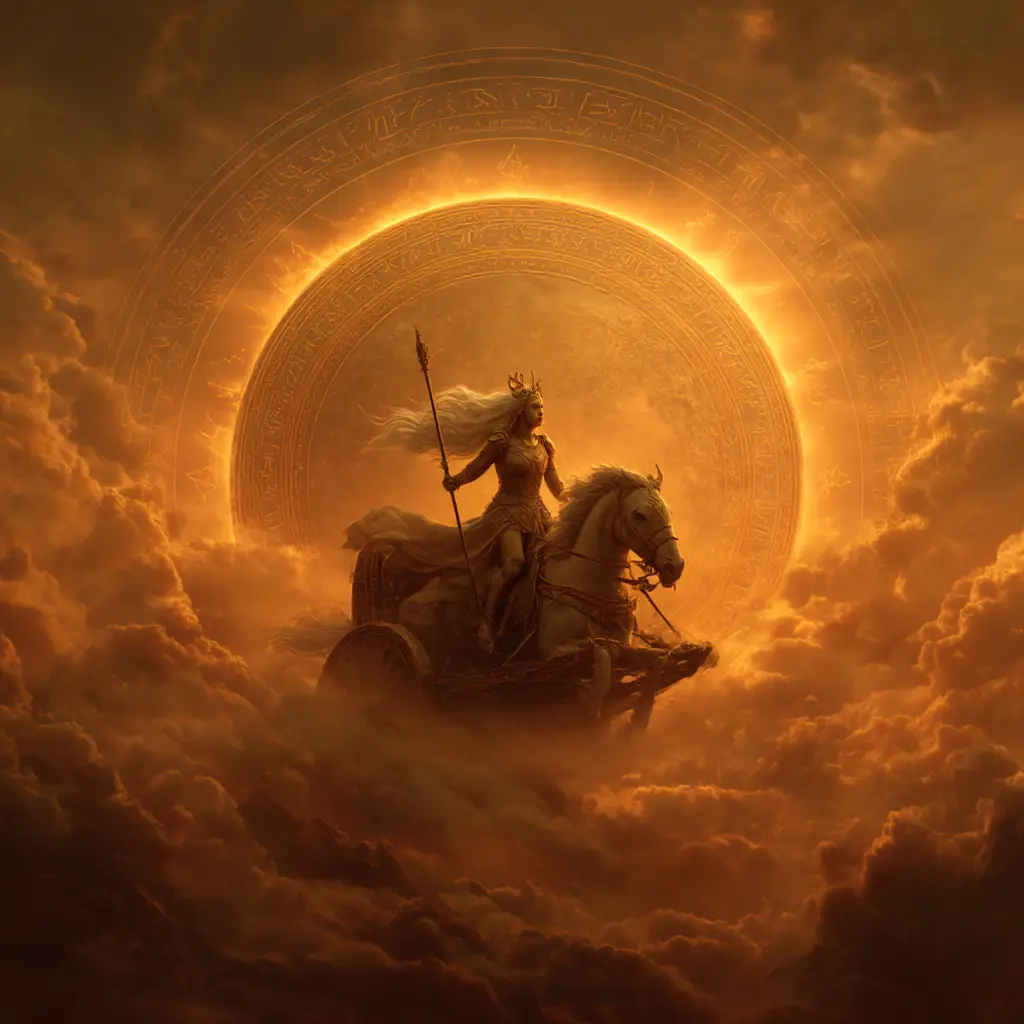
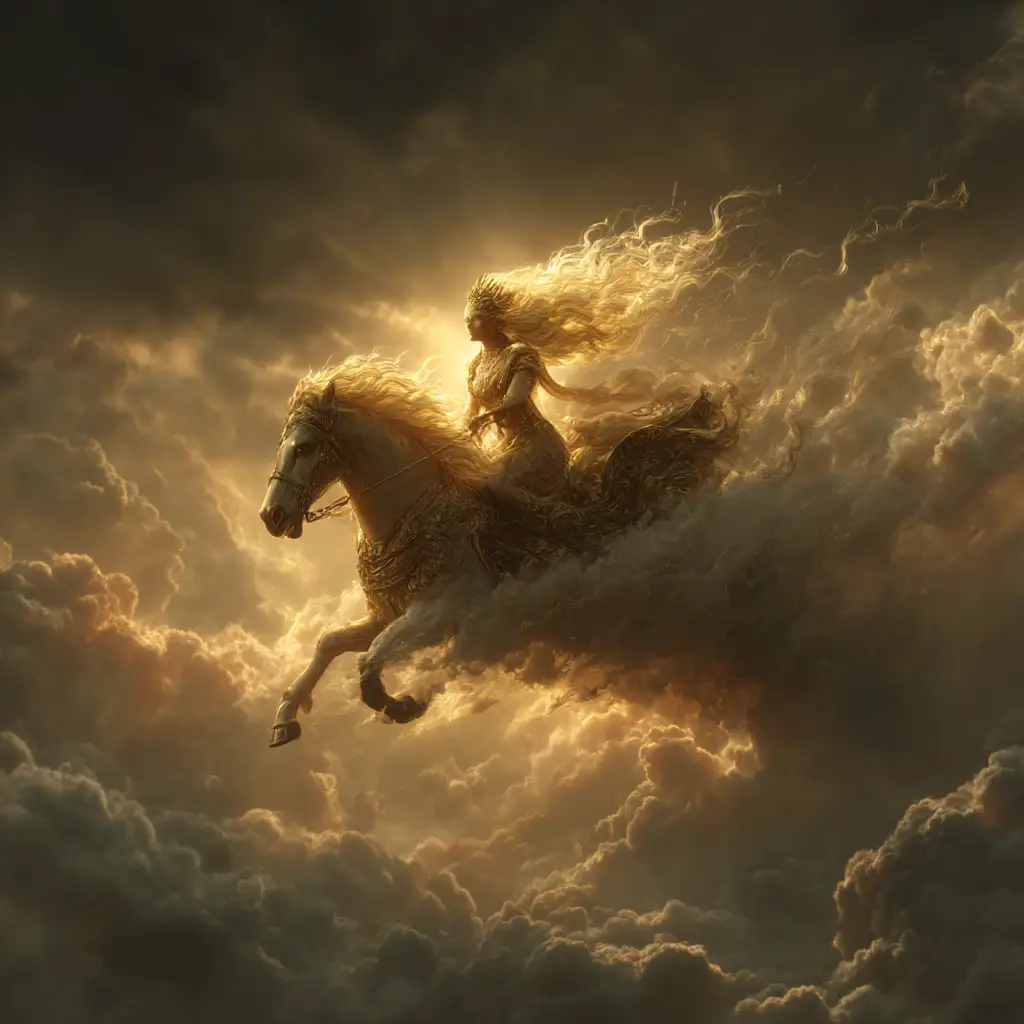
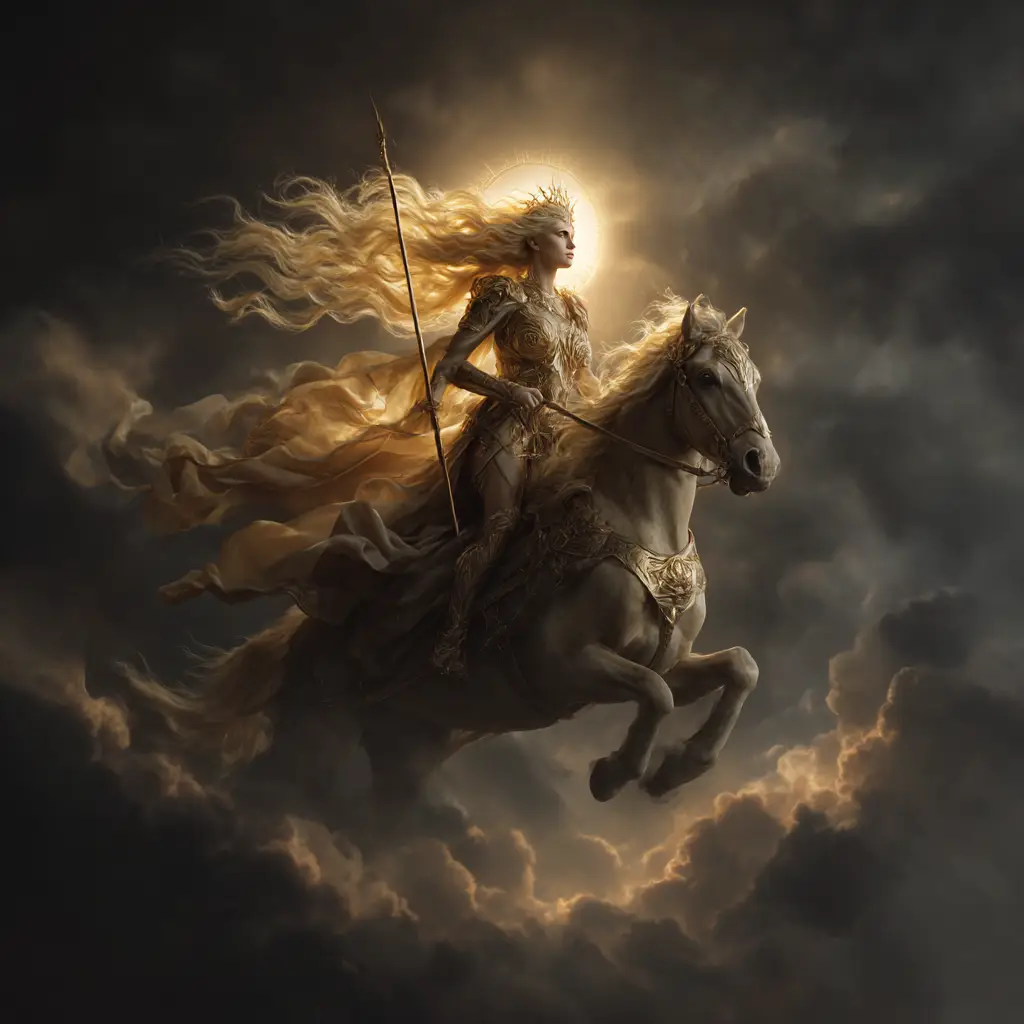
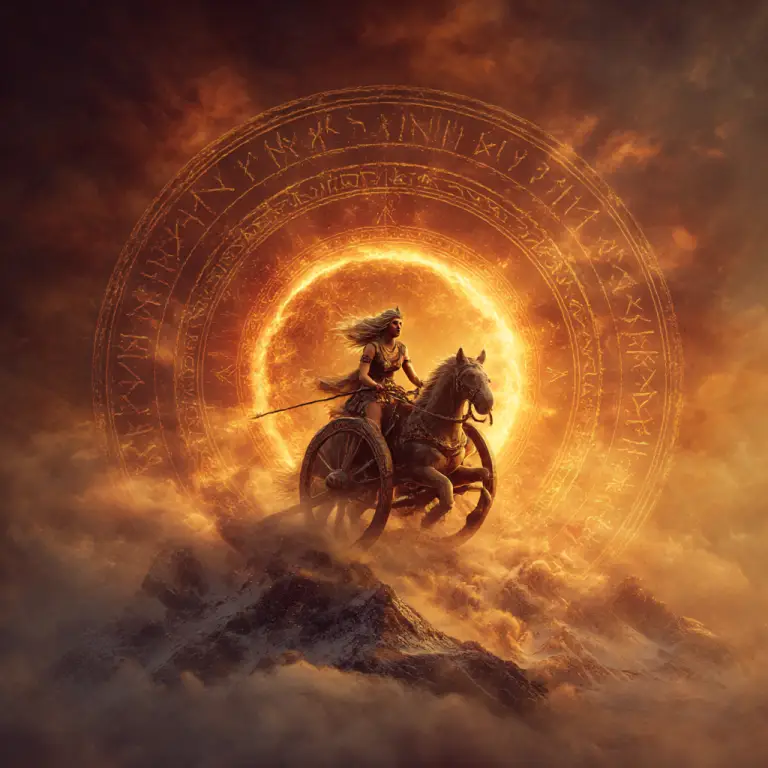
Sól drives the sun across the sky in a horse-drawn chariot. The horses, Árvakr and Alsviðr, pull the chariot tirelessly, and the gods placed bellows under their shoulders to cool them as they travelled. Sól’s path determines daylight and marks the passing of each day. Her journey is not a peaceful one. She is relentlessly chased by a wolf named Sköll, one of the offspring of the monstrous wolf Fenrir. Sköll’s pursuit provides an explanation for the movement of the sun and contributes to the tension woven through Norse cosmology.
The movement of the sun in Norse belief is not only a practical explanation of daylight but also a symbol of constant struggle. Sól’s flight from Sköll represents the idea that cosmic forces are always on the brink of conflict, and stability exists because powerful beings constantly battle to maintain it.
Symbolism and Cultural Context
Sól embodies more than the physical sun. She represents life, warmth, and clarity. In northern cultures where harsh winters and limited daylight shaped daily existence, the sun held deep emotional and practical significance. Sól’s presence in myth reflects the importance of light and hope to Norse communities, as well as the belief that light requires effort and protection.
Her story also reflects wider Indo-European patterns. Many mythologies personify the sun as a divine being, though often as male rather than female. The Norse choice to characterise the sun as a goddess highlights distinctive cultural associations within the region.
Sól and Ragnarök
Like many figures in Norse mythology, Sól has a foretold end. During Ragnarök, the apocalyptic battle that reshapes the cosmos, Sköll finally succeeds in catching her. The wolf devours her, and darkness overwhelms the world. However, Sól’s legacy does not vanish. According to the myths, she bears a daughter who will take her place in the renewed world that rises after Ragnarök. This successor continues the sun’s path, ensuring that light returns even after the destruction of the old order.
This cycle reinforces a central theme in Norse mythology. Endings are inevitable, but renewal follows. Chaos destroys the familiar world, yet a new generation emerges to restore balance.
Sól in Literature and Modern Interpretation
Sól appears throughout the Eddic poems and later medieval writings, though she is not always given a central narrative role. Her presence is often functional, describing the structure of the cosmos and the flow of time. Over the centuries, she has inspired poetry, scholarly work, and modern retellings. Contemporary interest in Norse mythology has brought renewed attention to her character, often highlighting her as a symbol of endurance, light, and cyclical rebirth.
While the surviving myths do not describe her personality in depth, her symbolic importance has grown. Writers and historians often interpret her as a quiet yet essential force, one whose daily effort sustains the world.