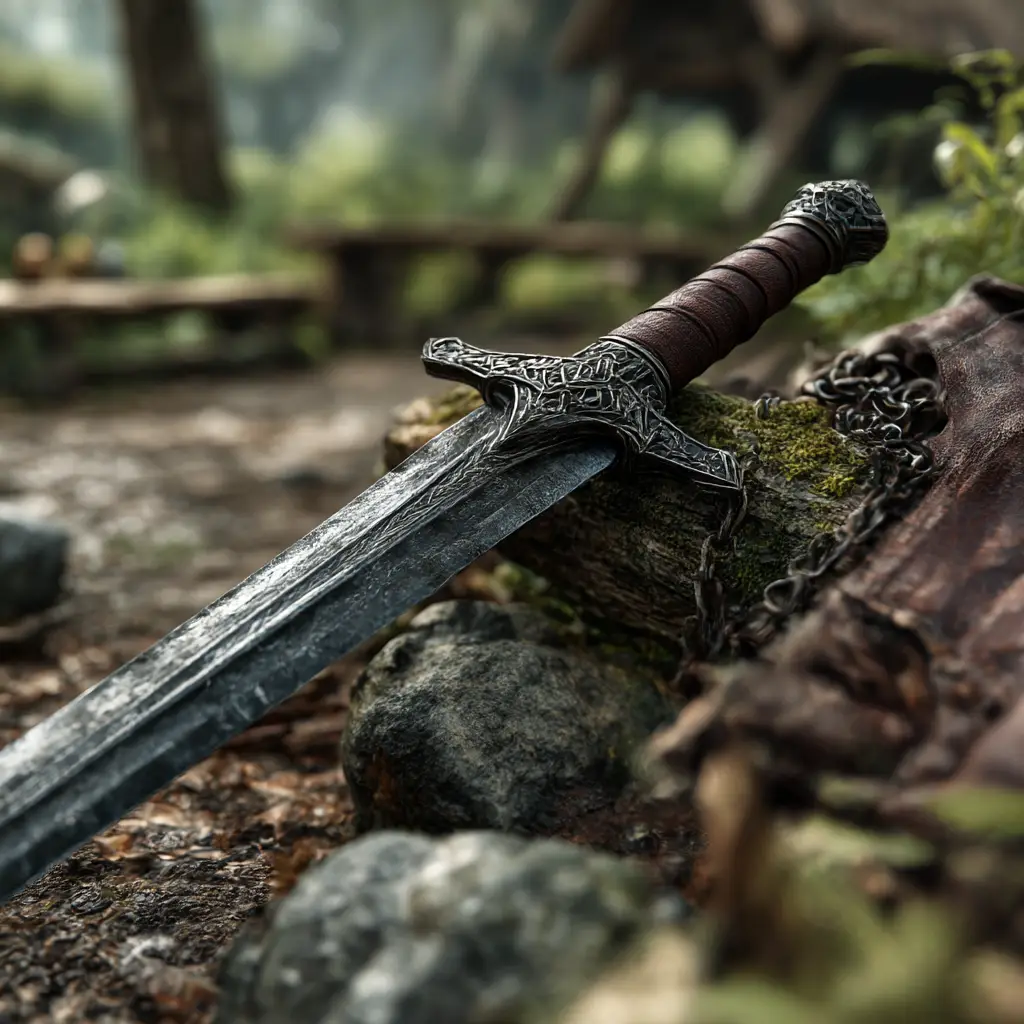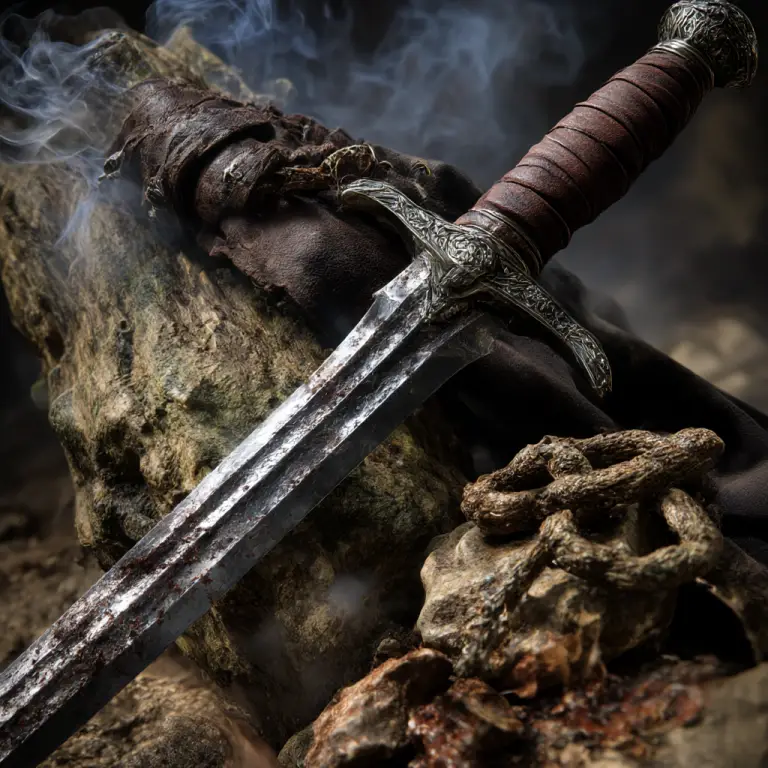
Among the weapons of Norse mythology, few carry a reputation as dark and relentless as Tyrfing. Forged by dwarves, bound by a terrible curse, and passed through generations of warriors, Tyrfing is not merely a sword—it is a force of fate, cutting through lives and shaping the tragic destinies of those who wield it.
Origins of Tyrfing
The story of Tyrfing begins with a king’s demand and a craftsman’s resentment. According to the Hervarar saga ok Heiðreks, the blade was forged by two dwarven smiths, Dvalinn and Durin, who were renowned for their skill. They were compelled by Svafrlami, a king of Garðaríki, to create a weapon of unmatched quality.
The dwarves did not comply willingly. Forced into service, they crafted a blade of extraordinary power—but they also wove a curse into its making.
Tyrfing was said to possess three defining qualities:
- It would never miss its mark once drawn.
- It could cut through iron and stone as easily as cloth.
- It would never rust or lose its sharpness.
Yet these gifts came at a cost. The dwarves cursed the sword so that it would:
- Cause death every time it was unsheathed.
- Bring ruin to its bearer and their kin.
- Be the instrument of three great evils.
The Curse Unfolds
The curse of Tyrfing is not abstract—it manifests repeatedly, with grim consistency.
After its forging, King Svafrlami becomes its first victim. The sword is taken by the berserker Arngrim, setting in motion a chain of violence that continues across generations. The blade passes to Arngrim’s descendants, most notably his son Angantyr, a warrior of great renown.
Angantyr’s death does not end Tyrfing’s story. In one of the more haunting episodes, his daughter Hervor ventures to her father’s burial mound to reclaim the sword. The scene is steeped in the eerie atmosphere typical of Norse legend—Hervor confronts the restless dead, demanding her inheritance despite warnings of the blade’s curse.
She succeeds, but the act ensures the continuation of Tyrfing’s destructive path.
A Weapon That Demands Blood
Tyrfing’s defining trait is its refusal to remain idle. Once drawn, it must take a life before it can be sheathed again. This transforms the sword from a tool into a compulsion, overriding the will of its bearer.
One of the most tragic consequences occurs when the blade is drawn in a moment that does not call for violence. In such instances, the wielder is forced to turn the sword against friend or kin to satisfy its curse. The weapon does not distinguish between enemy and ally—it simply fulfils its nature.
This idea reflects a broader theme in Norse mythology: that fate, once set in motion, is difficult—perhaps impossible—to escape.
Symbolism and Meaning
Tyrfing is more than a legendary weapon. It embodies several key elements of Norse thought:
- Fate (Wyrd): The inescapable destiny that governs gods and men alike.
- The Cost of Power: Great strength often carries an equal burden.
- Cycles of Violence: Actions ripple through generations, shaping the future in ways that cannot be undone.
Unlike heroic weapons that serve noble causes, Tyrfing resists moral framing. It does not belong to good or evil—it simply enforces consequences.
Legacy in Norse Tradition
The story of Tyrfing survives through the Hervarar saga, part of the legendary sagas that blend myth, history, and folklore. Its narrative stands alongside other famed cursed objects in world mythology, yet it retains a distinctly Norse tone—bleak, direct, and unflinching in its portrayal of fate.
Tyrfing’s influence can be seen in later storytelling traditions, particularly in the recurring idea of the cursed sword—a weapon that grants power but exacts a heavy toll.