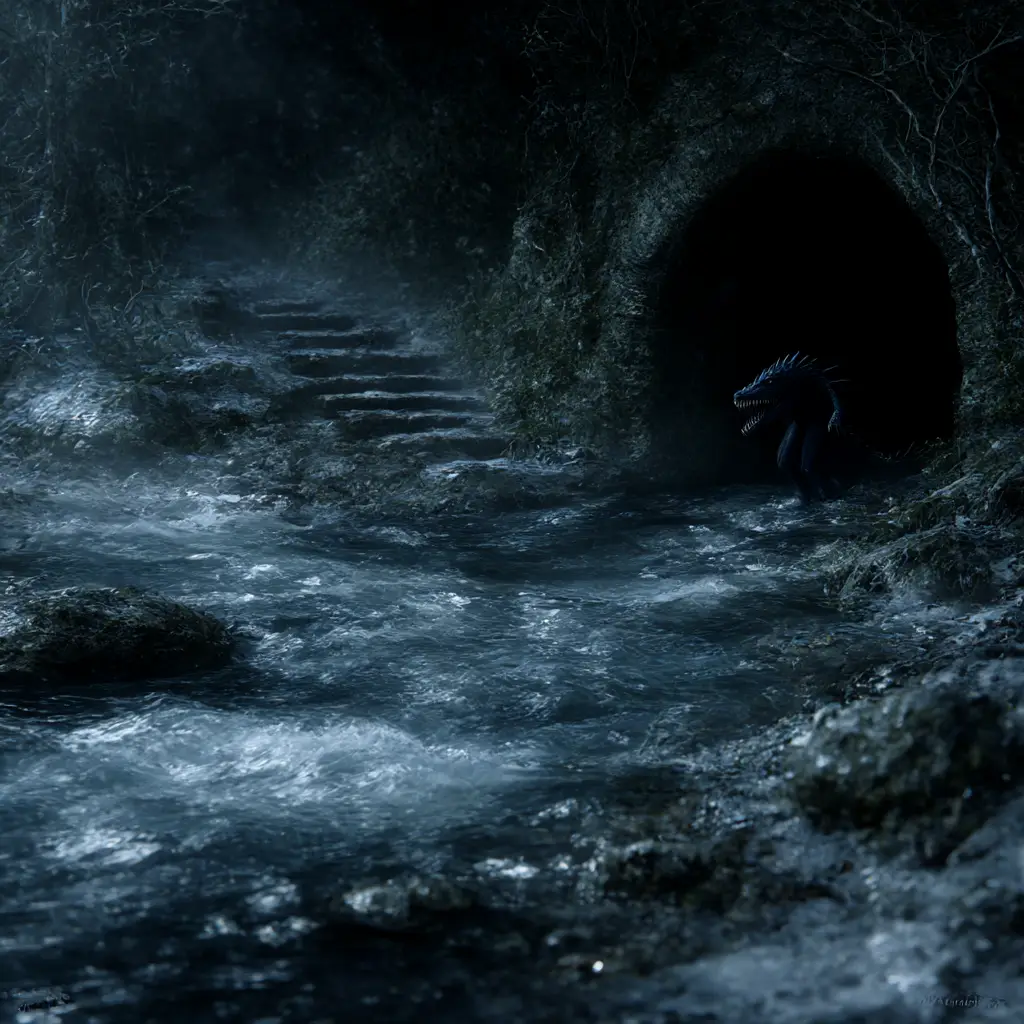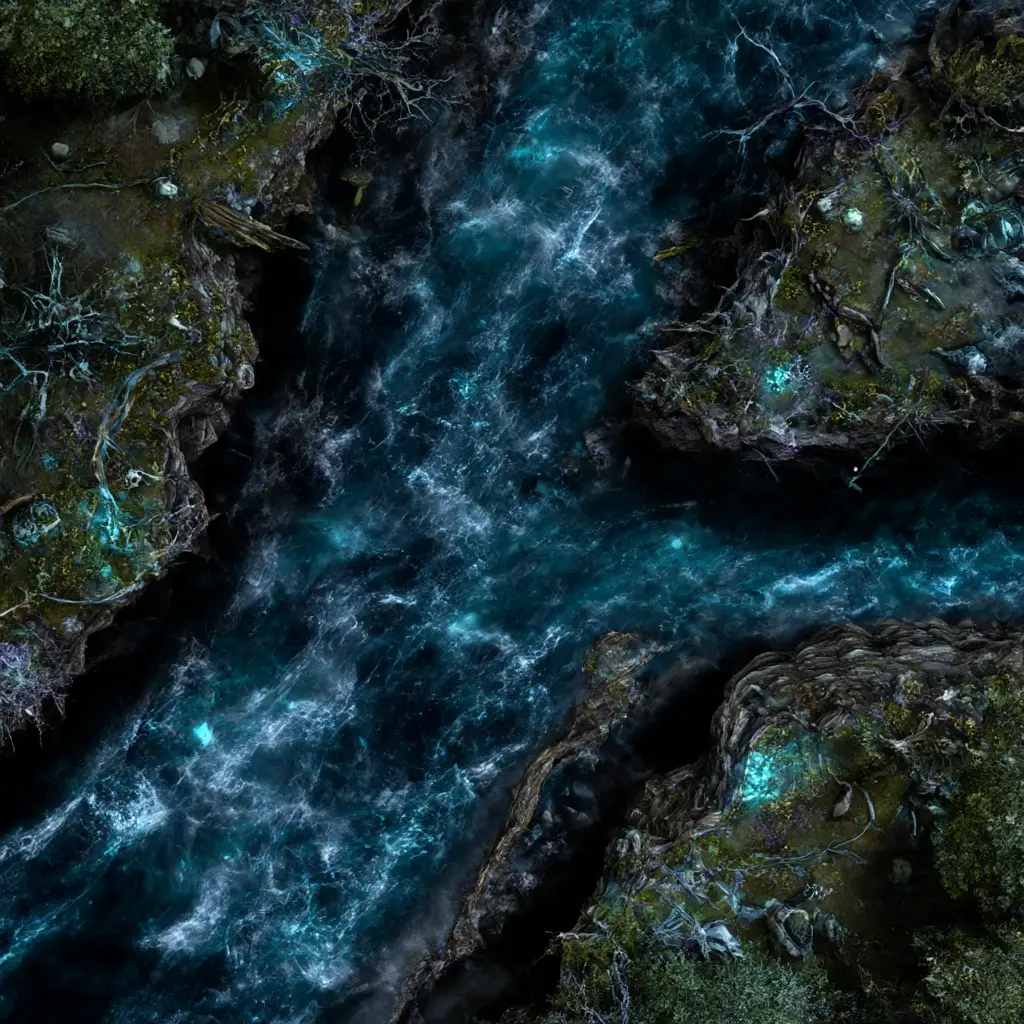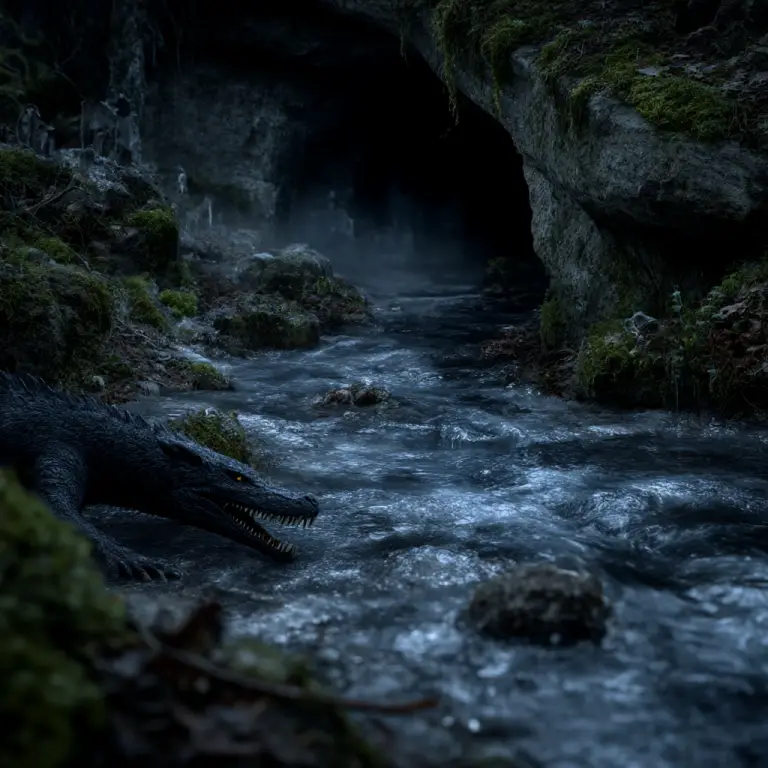
In Norse mythology, the river Gjöll is one of the most striking features of the boundary between the worlds of the living and the dead. It flows close to Hel, the realm ruled by the goddess Hel, and marks a threshold that souls must cross after death. Unlike the more familiar rivers of myth that nourish life, Gjöll is associated with finality, separation, and the passage into the afterlife.
Gjöll is described in Old Norse sources as a loud and rushing river, its name often translated as “noisy” or “roaring”. This sense of sound reinforces its symbolic role as a barrier that cannot be ignored or easily crossed. The river forms part of the defensive boundary around Hel, making it both a physical and spiritual obstacle. It is not a place for the living, but rather a liminal zone where the fate of the dead is confirmed.
Crossing Gjöll is an essential part of the journey to Hel. The river is spanned by a bridge known as Gjallarbrú, which is said to be covered in shining gold. Guarding this bridge is the watchful figure Móðguðr, whose role is to question those who attempt to pass. She ensures that only the dead may cross into Hel, reinforcing the idea that Gjöll is a one-way boundary. Those who approach must account for themselves, reflecting the Norse belief that identity and reputation carried weight even after death.
The river appears most notably in the myth of Baldr, the beloved god whose death sends shockwaves through the cosmos. When he dies, his body is taken toward Hel, and his brother Hermóðr rides to retrieve him. Hermóðr’s journey includes crossing Gjallarbrú, where he encounters Móðguðr and is questioned before being allowed to continue. This episode gives one of the clearest narrative glimpses of Gjöll and its place within the wider cosmology.
Gjöll also reflects the Norse understanding of death as a journey rather than an abrupt end. The afterlife was not a single destination but a network of realms, and Hel was one of several possible outcomes depending on how a person lived and died. The presence of Gjöll emphasises that movement between these realms required transition and passage, often under watchful supervision.
Some scholars interpret Gjöll as part of a broader Indo-European tradition of boundary rivers separating life from death, comparable in function, though not identical, to rivers in other mythologies. In the Norse context, however, Gjöll retains a distinctly northern character, shaped by harsh landscapes, cold imagery, and a worldview that placed great importance on fate and inevitability.
Archaeological evidence does not directly confirm the existence of Gjöll as a belief tied to specific ritual sites, but references in literary sources such as the Prose Edda and Poetic Edda suggest that it held a meaningful place in the Norse imagination. These texts, written down in medieval Iceland, preserve earlier oral traditions that describe the structure of the cosmos and the journey of the soul.
Gjöll stands as a powerful symbol of transition and boundary in Norse mythology. It represents the divide that all must eventually face, a reminder of the inevitability of death and the structured path that follows. Through its presence in myth, it contributes to a wider understanding of how the Norse people viewed the afterlife, not as a distant abstraction, but as a defined and navigable realm with its own geography, guardians, and rules.