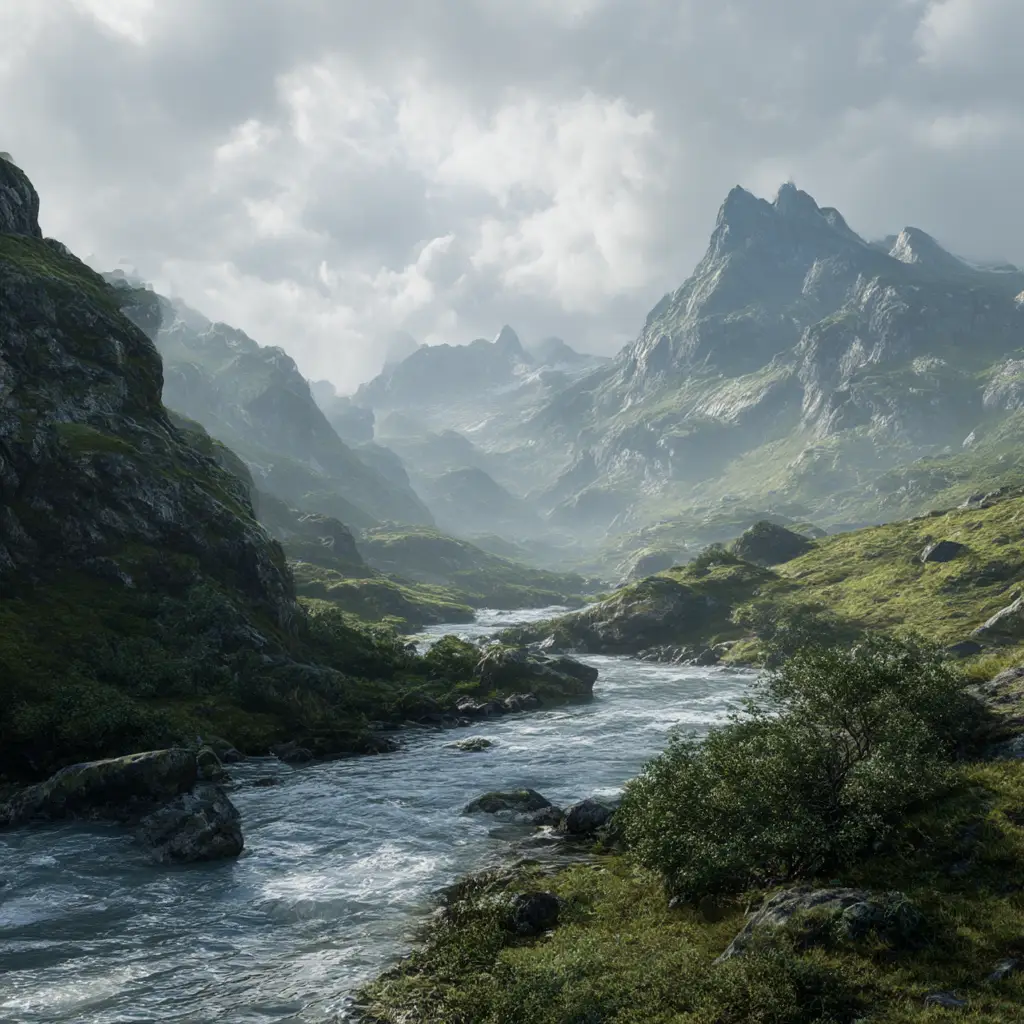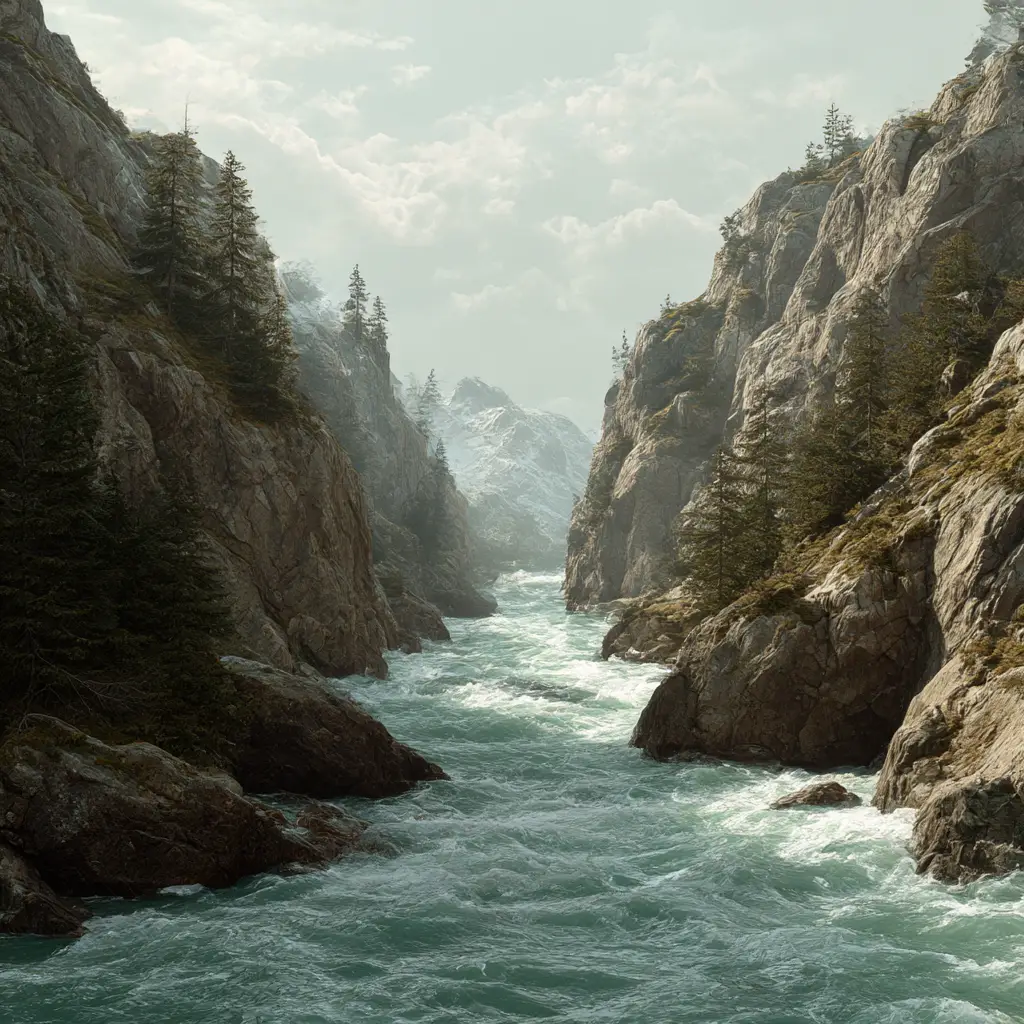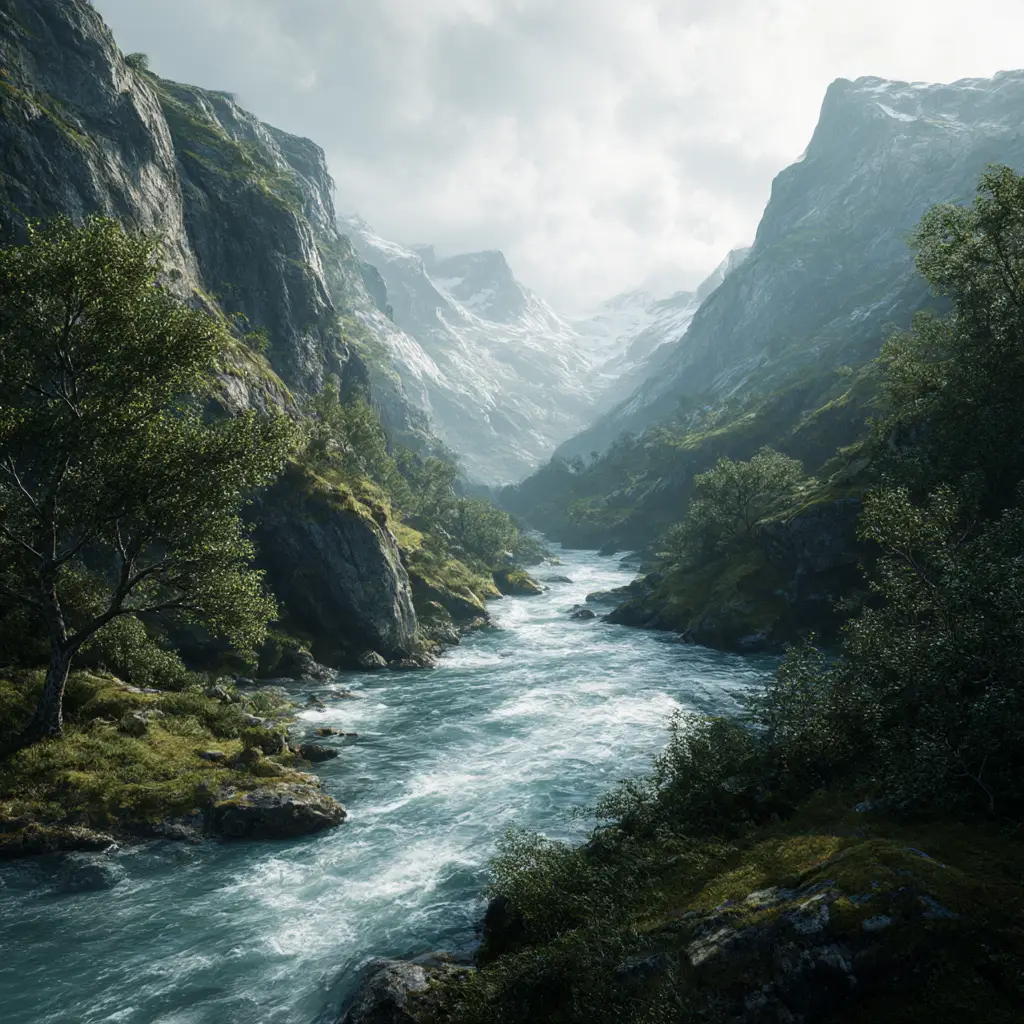
The Fimbulthul is a lesser-known but intriguing feature of the Norse mythological landscape. Its name is usually interpreted as something like the Mighty Roaring or the Great Howl, reflecting the idea of a powerful, rushing flow of water. While many rivers in Norse cosmology are mentioned only briefly, the Fimbulthul stands out due to its association with the dwarves and with the raw, untamed forces that existed before the shaping of the world.
In the myths, the Fimbulthul is typically linked with the group known as the Élivágar, a collection of primordial rivers that flowed from the wellspring of Hvergelmir in Niflheim. These rivers existed in the earliest stages of creation, long before the familiar realms such as Asgard and Midgard took form. As the Élivágar spread out into the void of Ginnungagap, their icy vapours and venomous substances interacted with the heat of Muspelheim, eventually leading to the formation of Ymir, the first being. In this way, rivers such as the Fimbulthul played a part in the very origins of the Norse cosmos.
The Fimbulthul also appears in Dvergatal, the dwarf list in the Poetic Edda. There it is referenced not as a physical river but as a poetic marker, suggesting either a place associated with dwarves or a metaphorical home or lineage. Dwarves in Norse tradition were often tied to subterranean waters, minerals, and deep places beneath mountains, so the name may point toward a river that symbolised their connection to the earth’s hidden depths. The ambiguity reflects how Norse mythology often blends physical geography with mythic symbolism.
While it is not as extensively described as rivers like Gjöll or Vimur, the Fimbulthul occupies an important thematic role. It represents the fierce and ancient forces that shaped the world, as well as the mysterious realm of the dwarves whose craftsmanship and knowledge influenced so many legendary items, including some of the gods’ most prized possessions.
In modern interpretations, the Fimbulthul is sometimes presented as both a literal river in the mythic landscape and a symbolic boundary between the ordered worlds of the gods and the wilder, older layers of creation. Because the surviving sources give only fragments, the river invites imagination and offers a sense of the hidden depths that run through Norse cosmology.