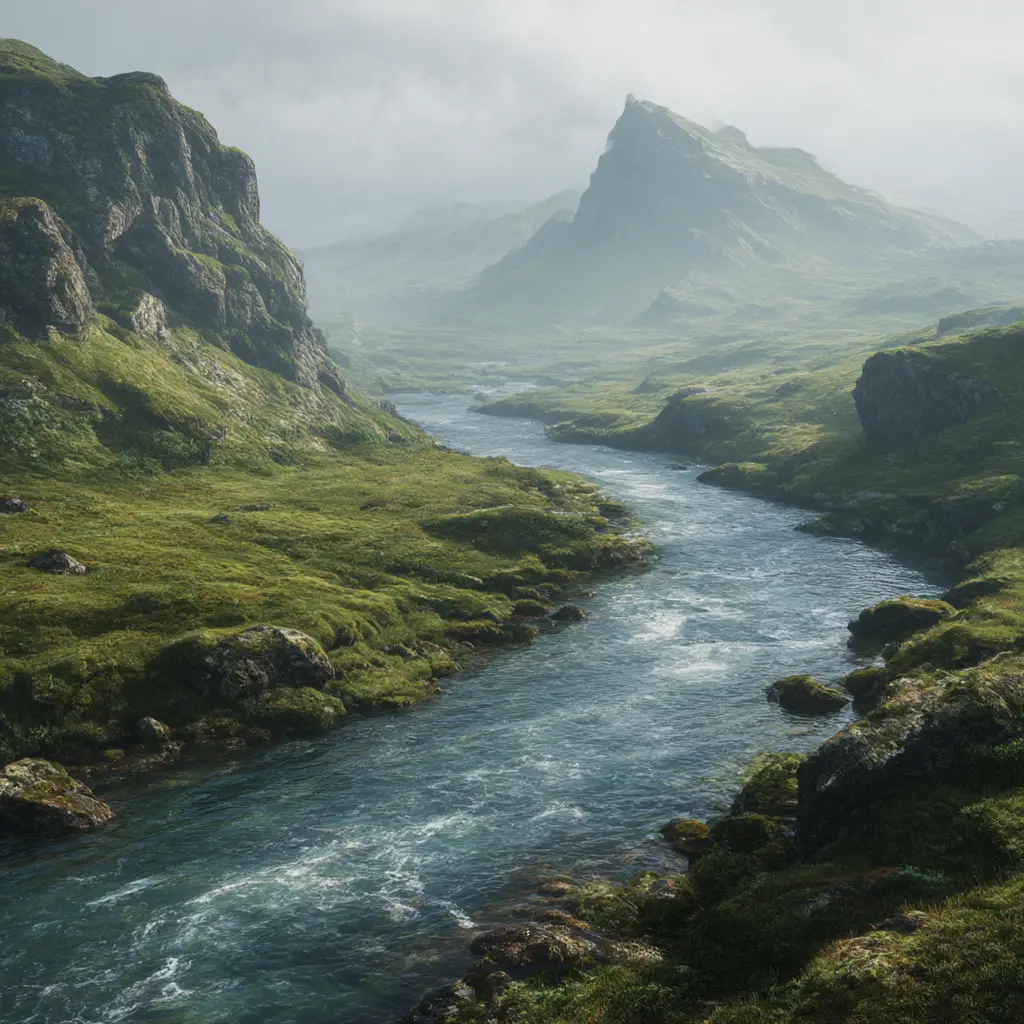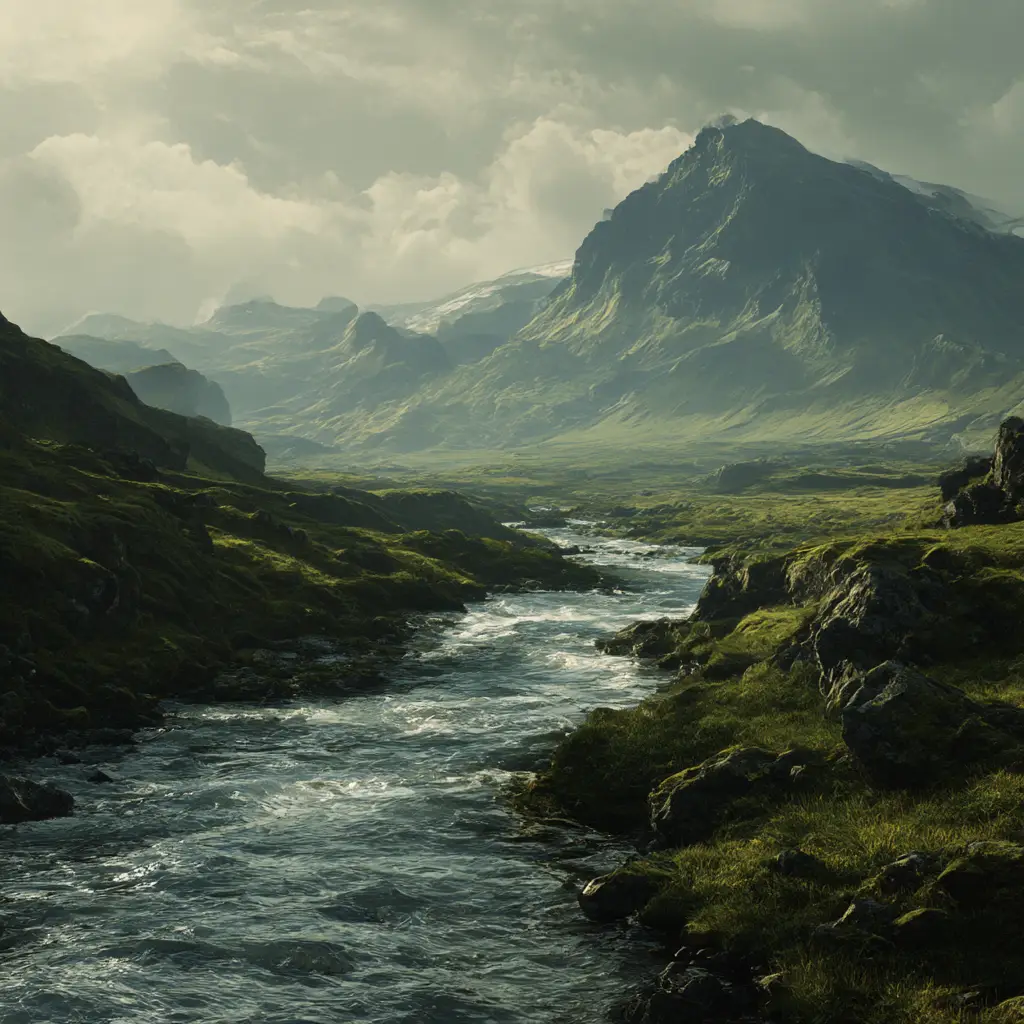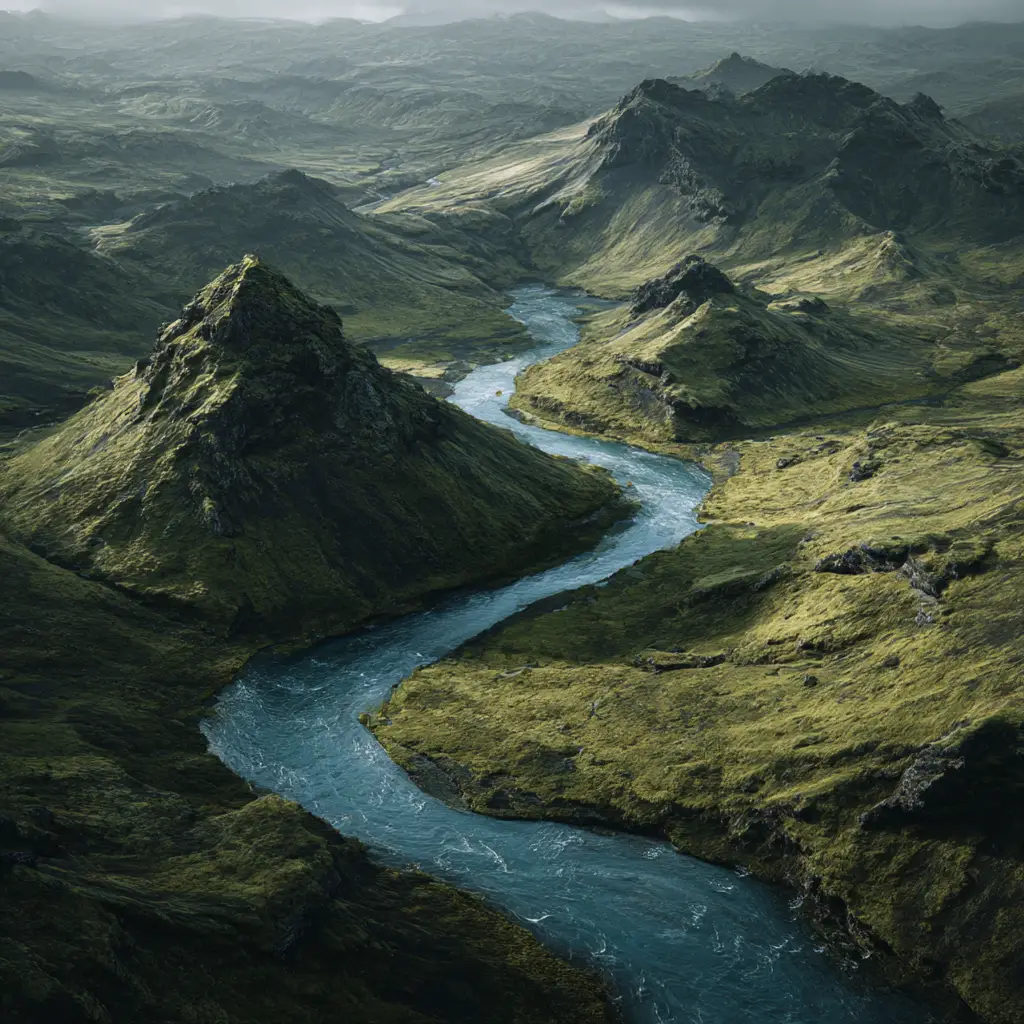
The Víð River, sometimes referred to in Norse sources as the “Wide River,” is one of the less commonly mentioned rivers within Norse mythology, yet it holds a place of importance in the cosmological and eschatological framework of the myths. Its name suggests a river of considerable breadth, evoking imagery of a vast and powerful watercourse, an element frequently associated with liminality and transition in Norse cosmology.
The river is often described in relation to the realms of the afterlife and the movements of gods and spirits. In some texts, it is depicted as a boundary or a barrier between worlds, much like Gjöll or Élivágar, marking the separation between the living and the dead, or between the divine and mortal realms. The waters of the Víð River are believed to carry both cleansing and perilous qualities, symbolising the passage of souls or the transformative journey inherent in Norse spiritual thought.
Geographically within the mythic landscape, the Víð River is sometimes connected to the surrounding lands of Asgard, Midgard, and Jotunheim, serving as a conduit or link in the flow of mythic energies and the paths of gods and giants alike. The river may also appear in descriptions of Ragnarok, the prophesied end of the world, where natural elements such as rivers, seas, and oceans play crucial roles in shaping the unfolding chaos. Its breadth and force are emblematic of nature’s uncontrollable power, a recurring theme in Norse myth that underlines the gods’ vulnerability despite their strength.
The Víð River embodies a symbolic resonance beyond mere geography. Its waters are a metaphor for the journey, the passage between life and death, order and chaos, and the ever-changing boundaries that define existence. While references to the river are sparse and often embedded within larger mythological narratives, it remains a potent symbol of transition, strength, and the inexorable flow of fate within the Norse worldview. Its presence in myth underscores the importance of rivers as agents of both life and destruction, reflecting the duality central to Norse cosmology.