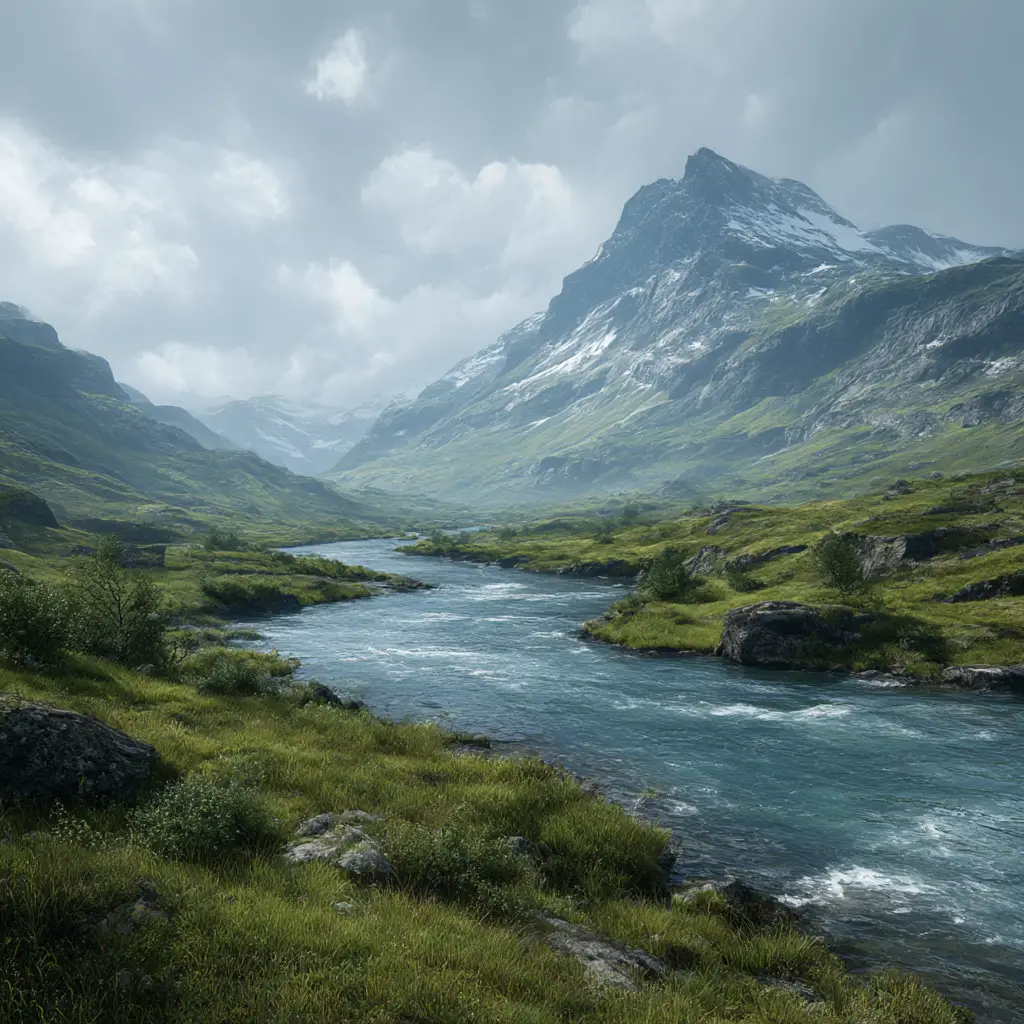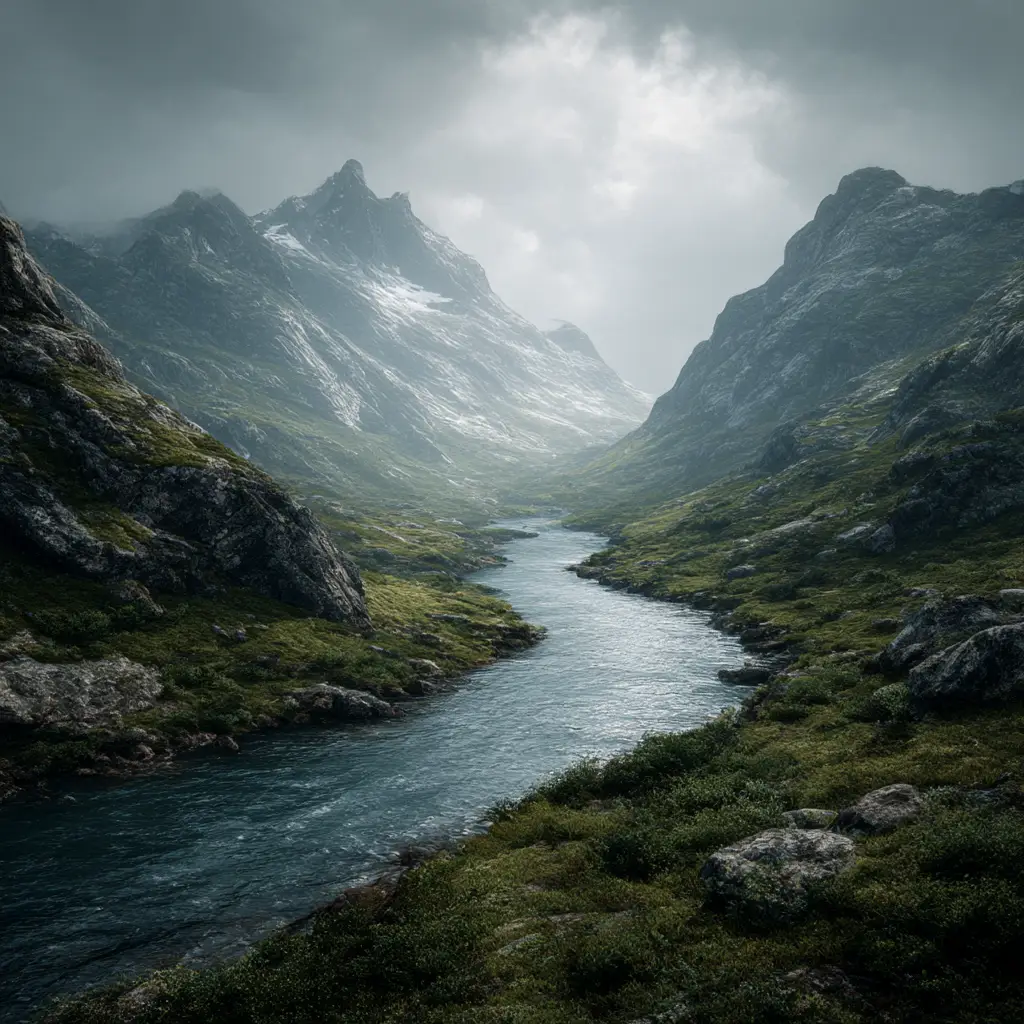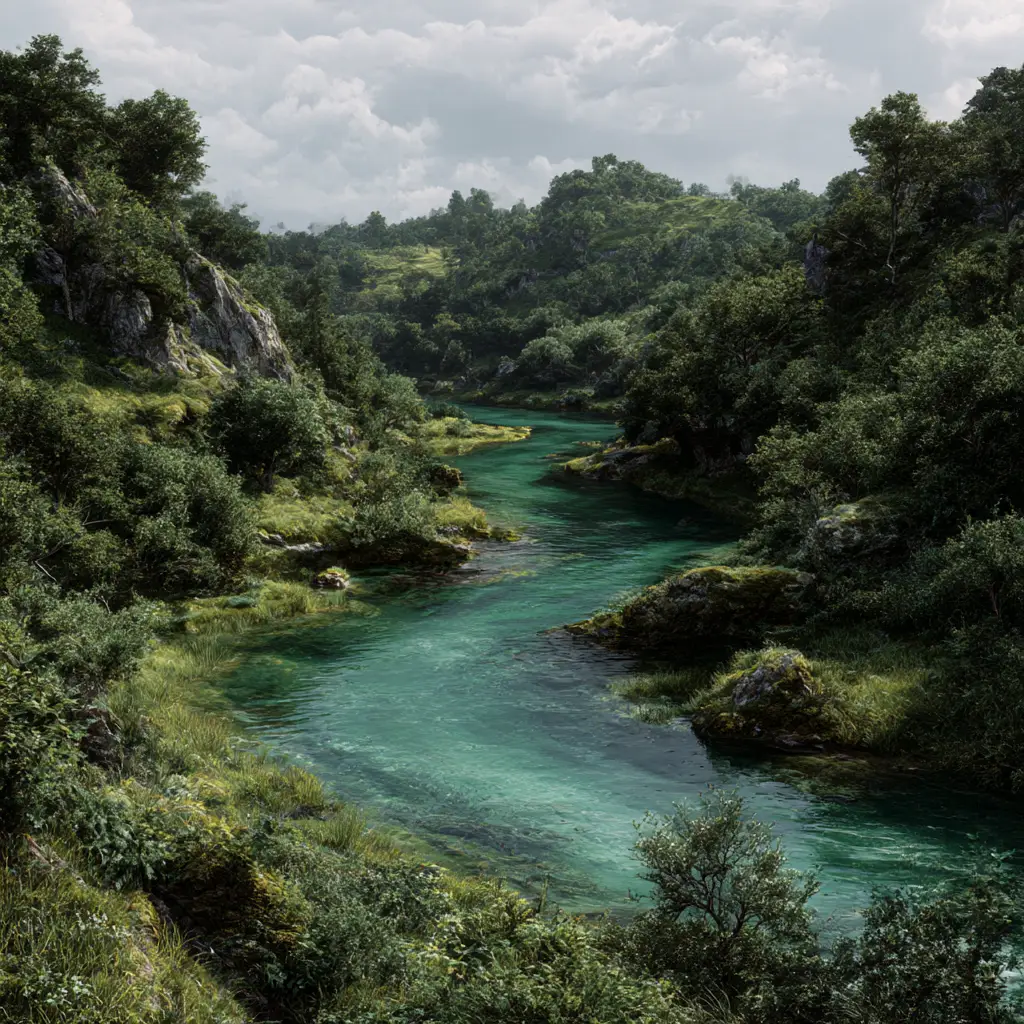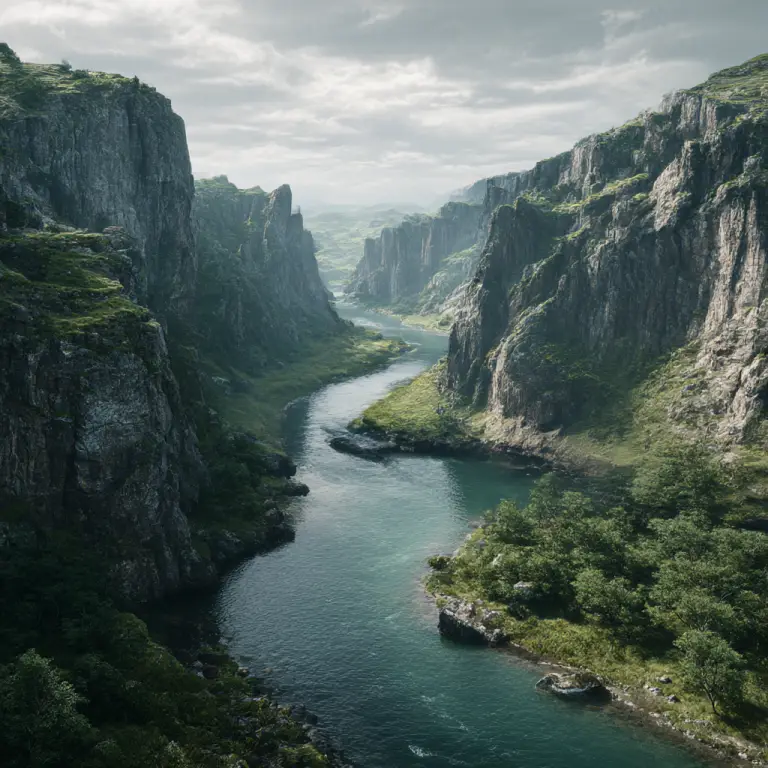
The Ylgr River is a lesser-known but intriguing element within Norse mythology, often associated with the mythic landscapes of the gods and giants. Its name, Ylgr, can be translated from Old Norse as “the howl” or “the yeller,” a reference to the fierce and untamed nature of the river. In Norse cosmology, rivers were more than physical boundaries; they often carried symbolic weight, representing the flow of life, the passage of time, and the power of natural forces.
The Ylgr River is described in certain sagas and poetic texts as flowing through regions inhabited by jötnar, or giants, whose raw strength and primal energy mirrored the turbulent waters. It is sometimes depicted as originating from the mountains and glaciers of the mythic north, cascading through dense forests and rocky landscapes before merging with larger rivers or seas. The river’s waters are frequently associated with challenges and trials, suggesting that crossing or navigating the Ylgr was a test of courage, skill, and divine favour.
In some interpretations, the Ylgr River is linked to the idea of fate and destiny. Norse mythology places a strong emphasis on the inevitability of events and the role of the Norns, the fates who weave the threads of life. Rivers such as the Ylgr may have been seen as physical embodiments of these forces, moving steadily and unalterably toward their destined end. This gives the river a dual character: both nurturing, as it sustains life in the lands it touches, and destructive, as its currents can overwhelm and destroy.
The cultural significance of the Ylgr River extends into ritual and storytelling. Poets and skalds may have invoked its name to evoke the untamed power of nature and the heroic endeavours of those who faced it. In the worldview of the Norse people, rivers like Ylgr were not merely geographic features but vital components of the mythic landscape, connecting the human and divine, the mortal and the eternal.The Ylgr River, though not as famous as rivers like Gjöll or Ifing, contributes to the rich tapestry of Norse mythology by highlighting the reverence and respect the Norse held for natural forces. It serves as a reminder of the interconnectedness of life, the trials imposed by nature, and the enduring presence of the supernatural in the everyday world of the Norse peoples. Its legacy endures in modern retellings of Norse myths and in the continued fascination with the dramatic and symbolic landscapes of the Viking imagination.