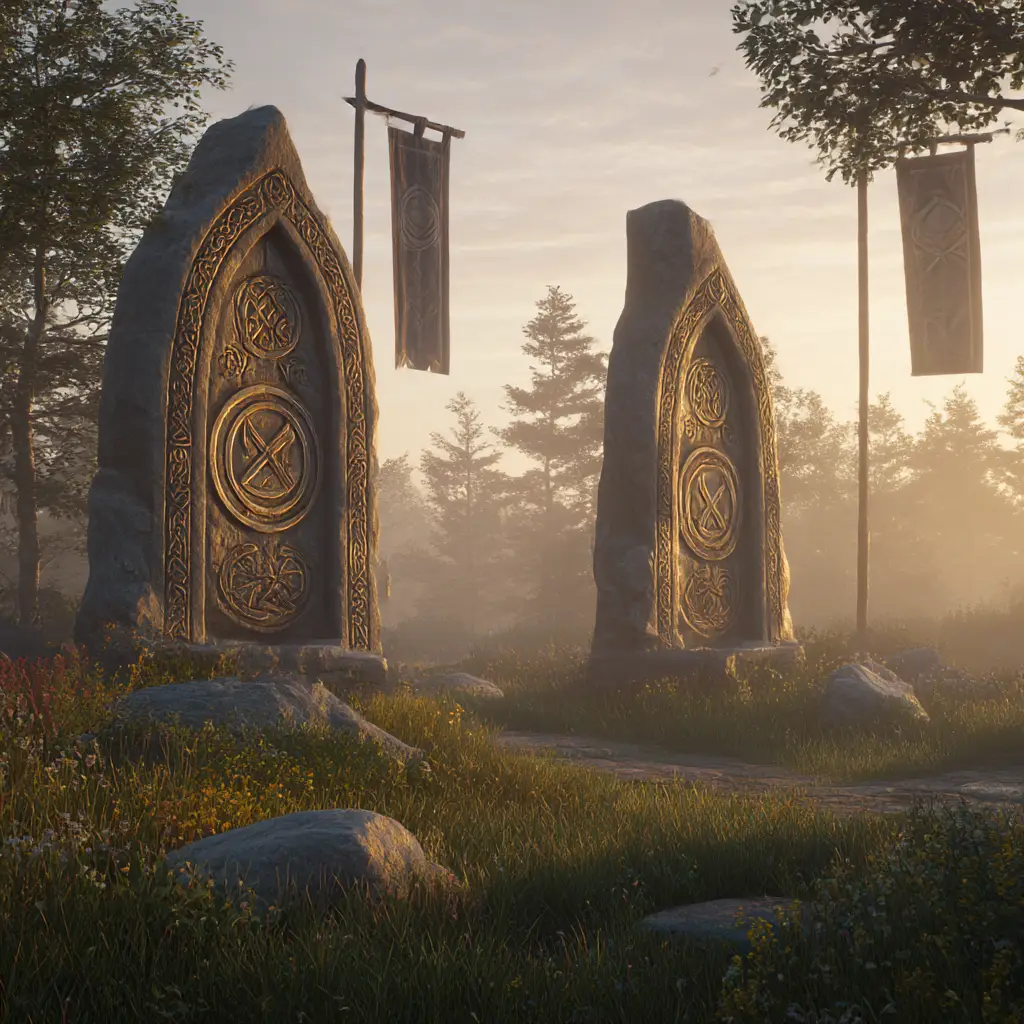
Glitnir is one of the great halls of the Norse gods and is most closely associated with justice, law, and fair judgement. It is described in medieval Norse sources as a place where disputes are settled and oaths are honoured, reflecting the importance of order and lawful conduct within the mythological worldview of the Vikings.
The Meaning and Description of Glitnir
The name Glitnir is commonly understood to mean “the shining one” or “the glittering hall.” According to the Prose Edda, Glitnir is said to be constructed with pillars of red gold and a roof made of silver. This radiant description symbolises clarity, transparency, and fairness, qualities expected of a place where justice is administered.
Unlike the feasting halls such as Valhalla, Glitnir is not associated with warriors or celebration. Instead, it represents calm authority and lawful resolution. Its brightness is not merely decorative but metaphorical, suggesting that truth and fairness are meant to be visible and unmistakable within its walls.
Forseti and the Hall of Justice
Glitnir is the dwelling place of Forseti, the god of justice, reconciliation, and peaceful judgement. Forseti is the son of Baldr and Nanna, and he embodies fairness, wisdom, and restraint. In Norse mythology, he is known for settling disputes in a way that satisfies all parties, rather than through punishment or force.
All who come before Forseti in Glitnir are said to leave in agreement, making him unique among the gods. This aspect of the myth highlights a strong cultural value placed on mediation and consensus, particularly in contrast to the violence and conflict often associated with Viking society.
Glitnir’s Role in Norse Cosmology
Glitnir is generally placed in Asgard, the realm of the Aesir gods, although its exact location is not clearly defined. Its presence in Asgard reinforces the idea that law and justice are fundamental pillars of divine order, standing alongside strength, wisdom, and fate.
While Glitnir is not frequently mentioned compared to more famous locations, its role is significant. It represents the ideal outcome of conflict resolution and serves as a reminder that even the gods value lawful structure and peaceful settlement.
Glitnir and Viking Legal Culture
The concept of Glitnir closely mirrors real-world Viking legal traditions. Norse societies relied heavily on assemblies known as things, where disputes were discussed publicly and judgements were made according to established laws. These gatherings emphasised dialogue, witnesses, and compromise rather than unilateral authority.
Glitnir can be seen as a divine reflection of these assemblies, elevating human legal practices to a cosmic level. Forseti’s fair rulings echo the ideal conduct of chieftains and law-speakers, reinforcing social stability and mutual respect.
Fate of Glitnir at Ragnarok
Like much of the Norse cosmos, Glitnir is destined to be destroyed during Ragnarok, the cataclysmic end of the world. Although the myths provide few details about its destruction, its fate underscores a recurring theme in Norse mythology: even order, justice, and divine law are not eternal.