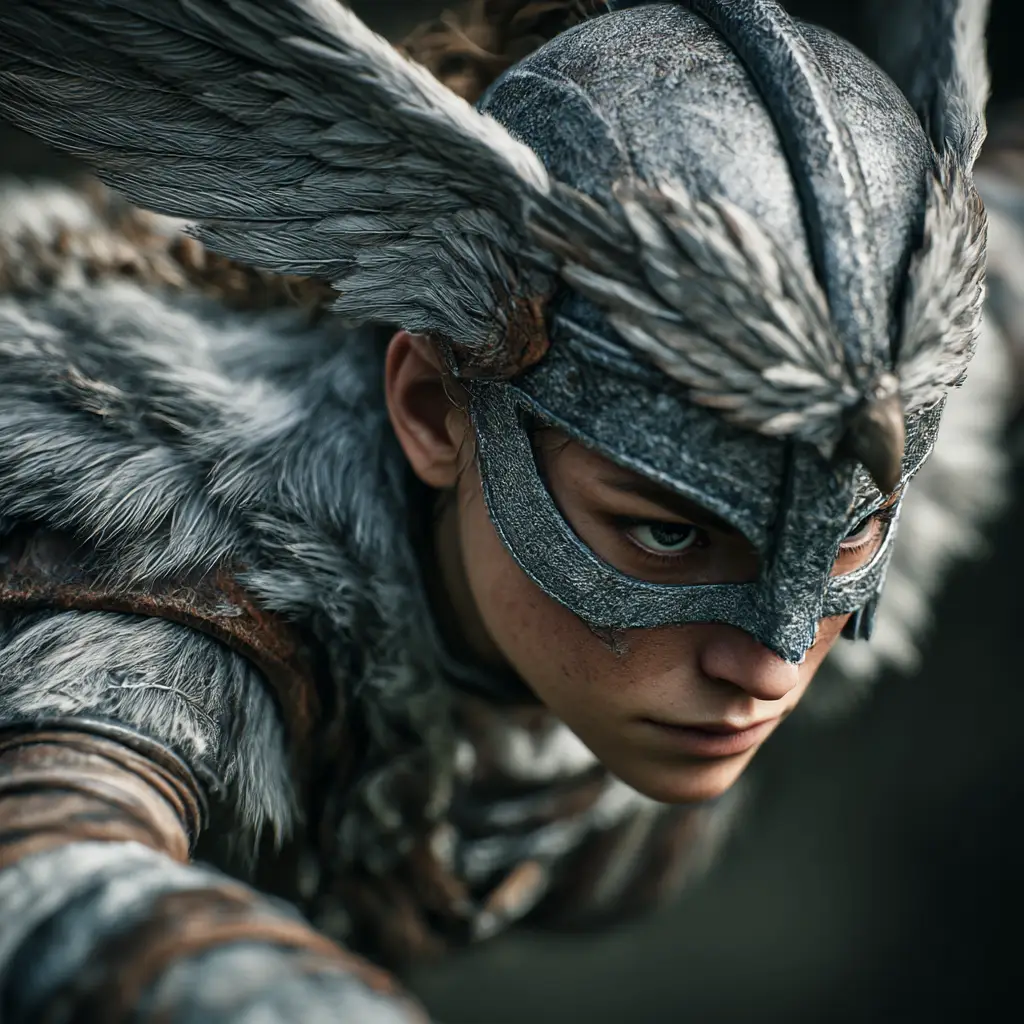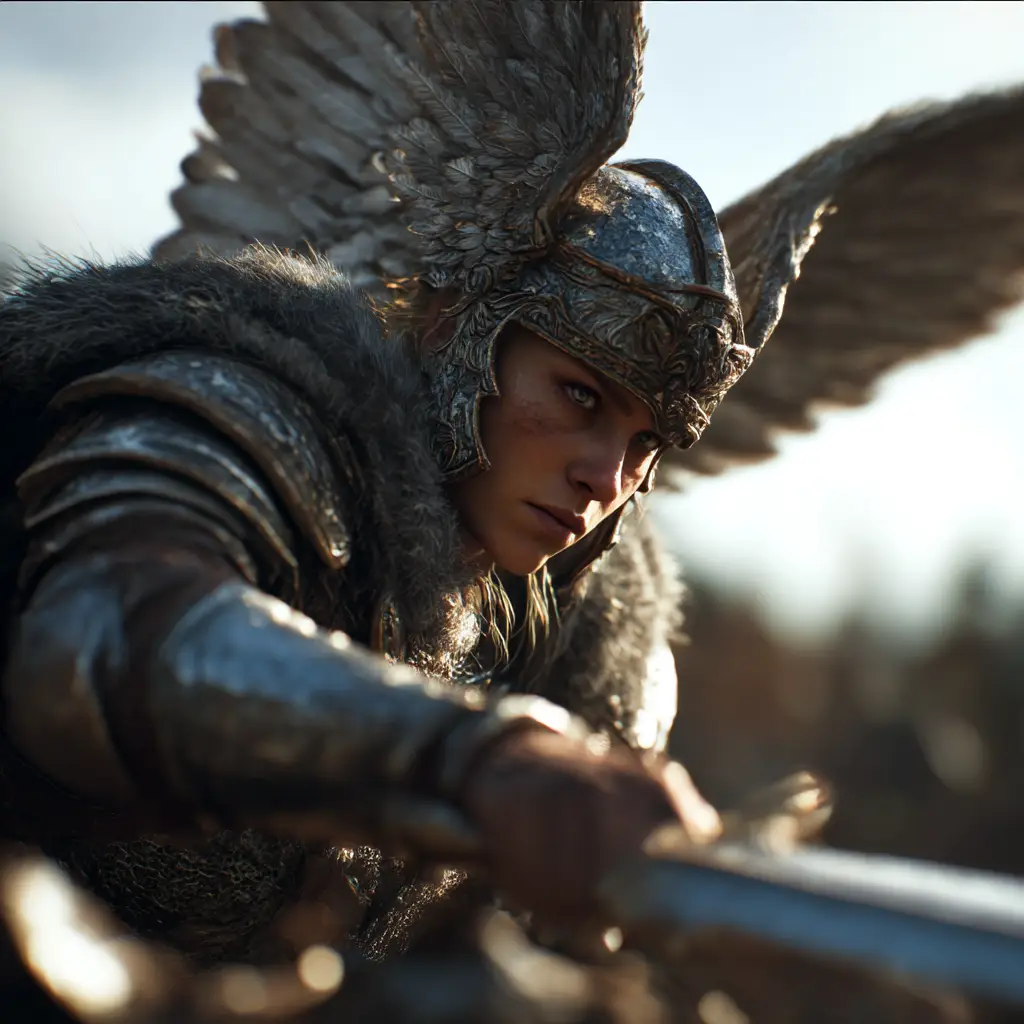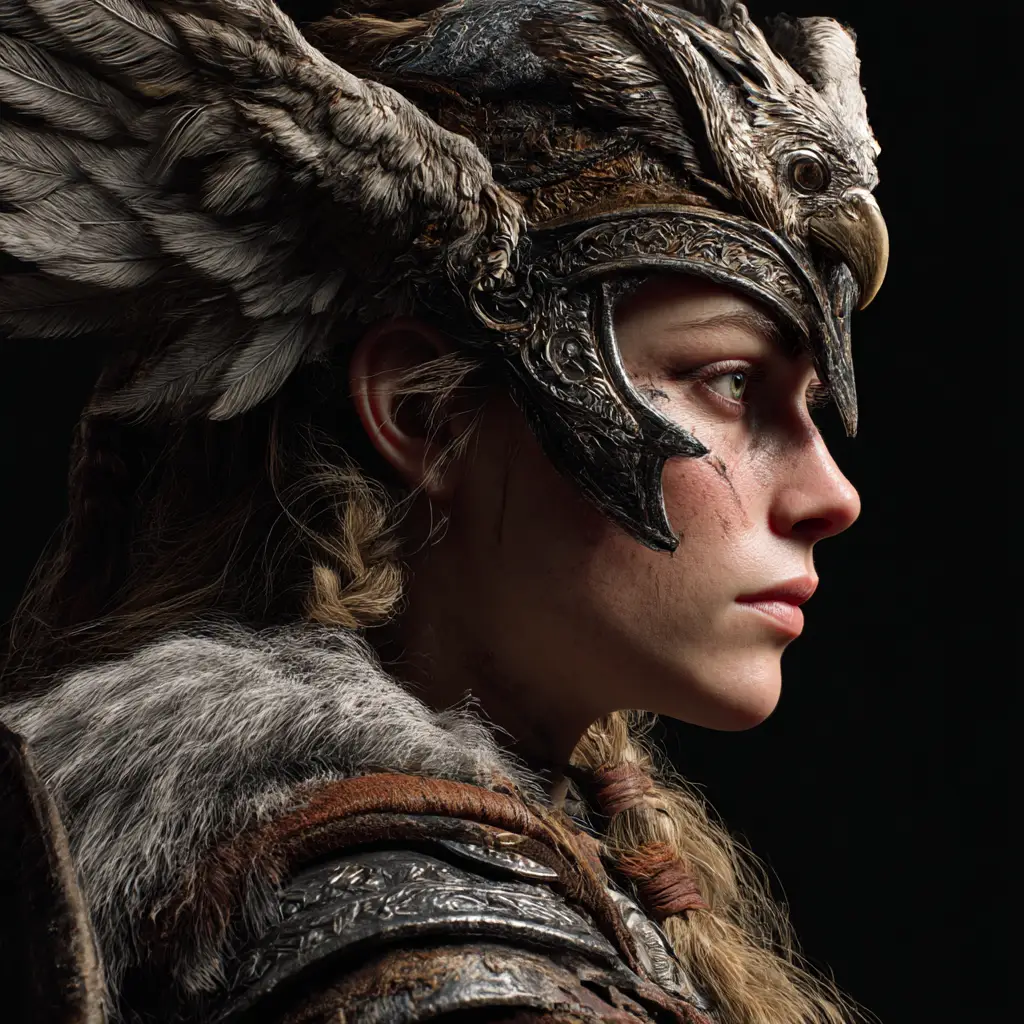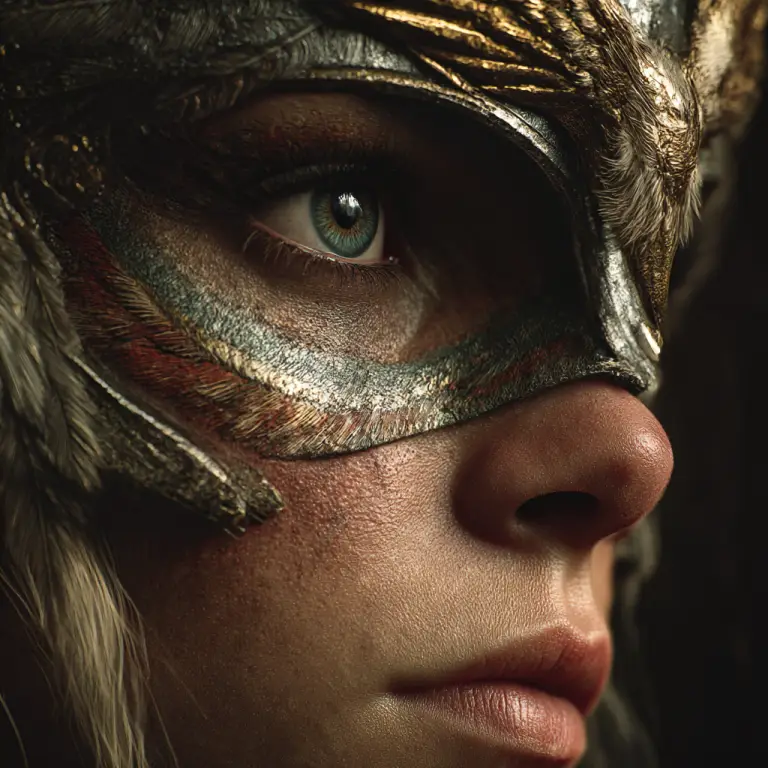
Sigrún is one of the more human and emotionally grounded figures among the Valkyries in Norse mythology. Her story appears mainly in the Poetic Edda, especially in the heroic poems Helgakviða Hundingsbana I and II. Unlike Valkyries who are portrayed only as divine choosers of the slain, Sigrún is given a personal history, strong emotions, and a tragic love story, which makes her stand out within the mythological tradition.
Sigrún is described as a Valkyrie, a supernatural female figure associated with Odin. Valkyries serve Odin by choosing which warriors will fall in battle and which will be taken to Valhalla. Sigrún’s name is generally translated as “victory rune” or “secret of victory”, linking her closely to fate, battle magic, and divine knowledge. In the poems, she is also said to be a swan-maiden, a type of Valkyrie able to shift between human and bird form, reinforcing her liminal nature between worlds.
Her father is named as King Högni, a powerful ruler, which places Sigrún in both the divine and royal human spheres. Despite her Valkyrie status, her life is constrained by human political decisions. She is promised in marriage to Höðbrodd, the son of King Granmar, against her will. This unwanted betrothal sets the stage for the central conflict of her story.
Sigrún meets Helgi Hundingsbane, a legendary hero and warrior king. Recognising him as her chosen partner, she actively intervenes in events rather than remaining a passive figure. She warns Helgi of an impending attack by her betrothed and his allies, directly influencing the outcome of the battle. Helgi defeats and kills Höðbrodd and his kin, an act that brings victory but also binds Sigrún to tragedy.
After the battle, Sigrún and Helgi are married, and for a time their story takes on the tone of heroic triumph. However, the violence that secured their union also ensures its doom. Helgi is later killed in vengeance by Dag, Sigrún’s own brother, who is compelled by an oath to Odin. This act highlights a recurring theme in Norse mythology: loyalty to fate and divine obligation often overrides personal bonds.
Sigrún’s grief is one of the most striking emotional passages in the Edda. She mourns Helgi intensely, cursing Dag for his betrayal and expressing despair at her loss. In one of the poems, Helgi is allowed to return briefly from the dead, riding from Valhalla to spend a final night with her in his burial mound. This scene blends love, death, and the supernatural, and is among the most haunting in Norse heroic literature.
After Helgi’s final departure, Sigrún’s fate is sealed. The poems suggest that she does not long survive him, dying of grief. In a later tradition, she is said to be reborn as a new Valkyrie and Helgi reborn as another hero, hinting at cyclical rebirth rather than a permanent ending. This idea fits well with Norse concepts of recurring fate and enduring heroic essence.
Sigrún represents a rare blend of divine power and human vulnerability. She chooses the slain and shapes the outcome of battles, yet she cannot escape the consequences of violence, oaths, and fate. Her story explores themes of love versus duty, the cost of vengeance, and the inevitability of loss in a world governed by destiny. As a result, Sigrún remains one of the most emotionally resonant Valkyries in Norse mythology, remembered not just for her role in war, but for her capacity for love and grief.