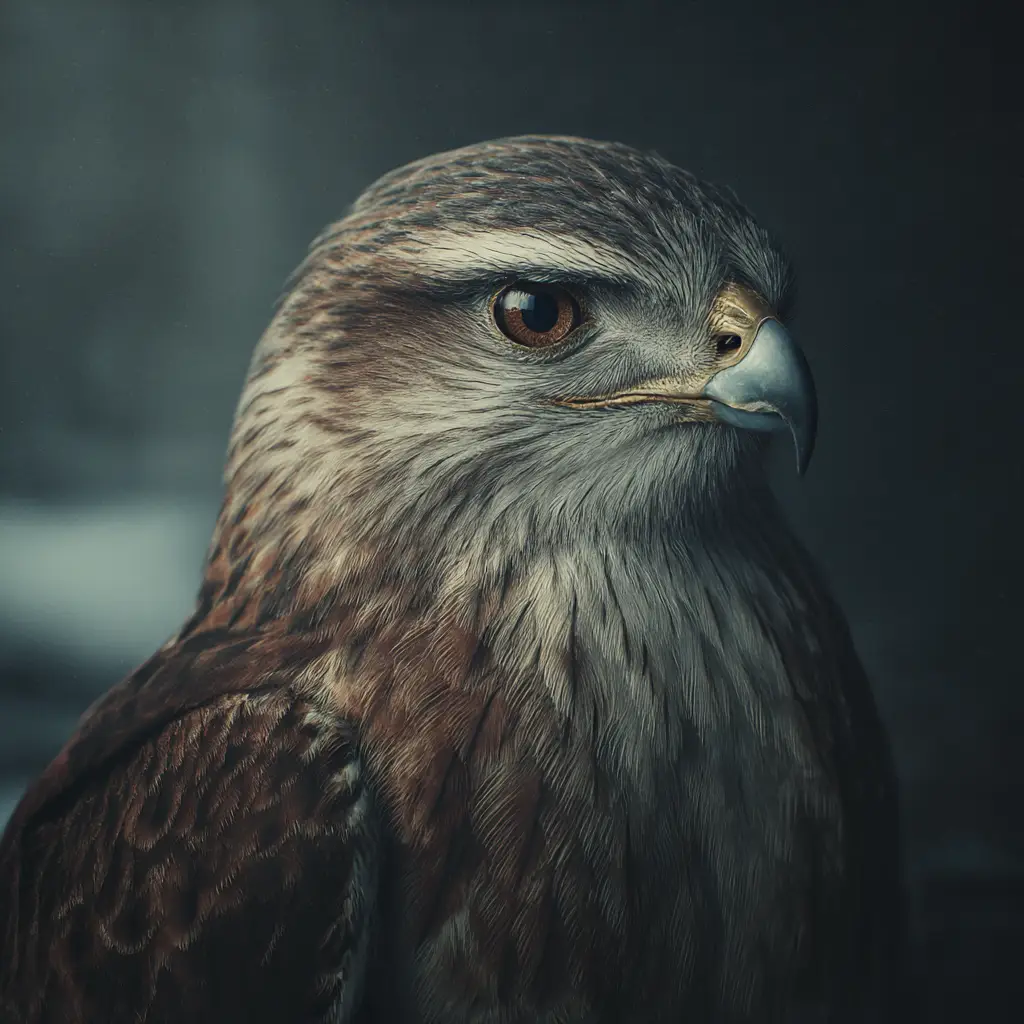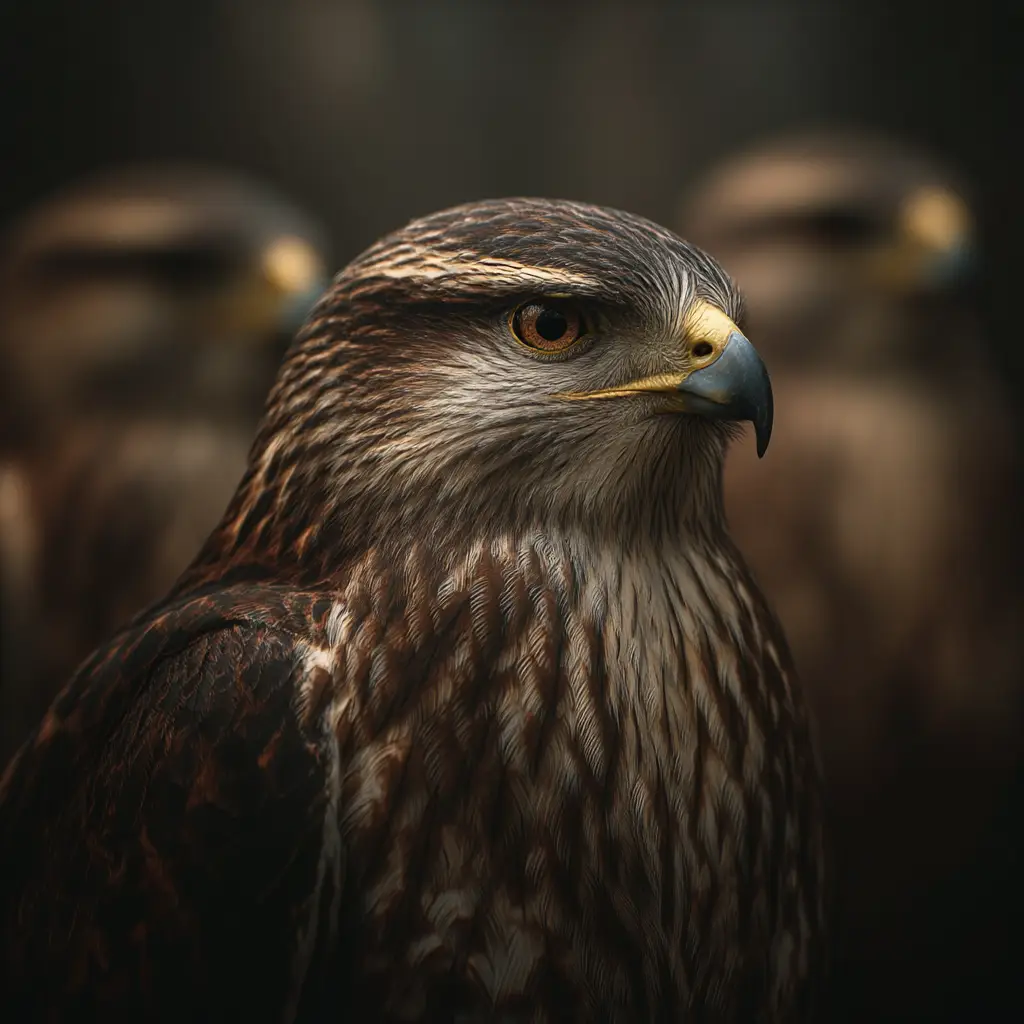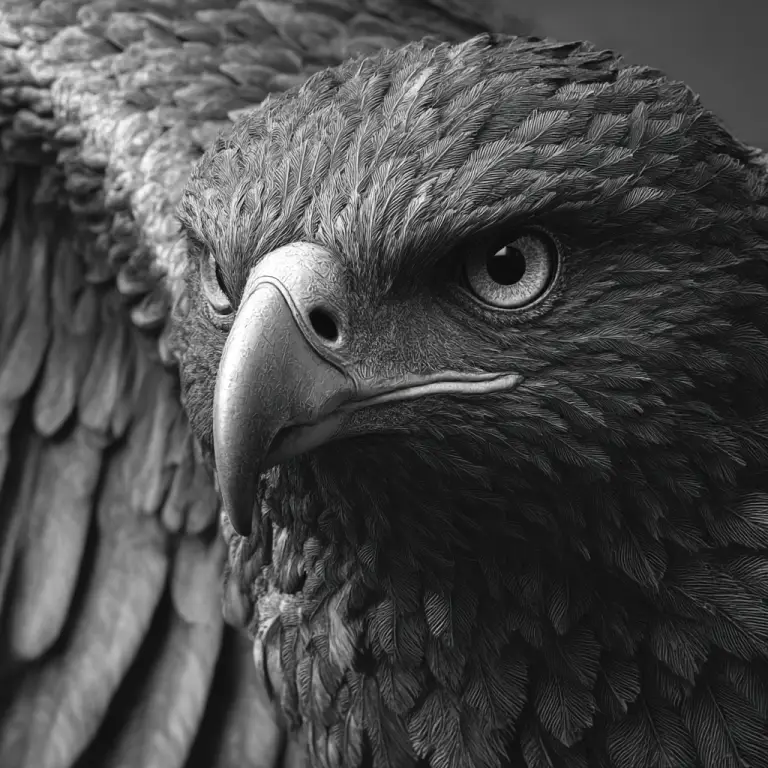
Hawks appear throughout the mythic landscape of the Norse world as symbols of sharp sight, swift action and hidden knowledge. Although they do not feature as frequently as wolves or ravens, the hawk’s presence carries weight and depth, often associated with the highest realms of the gods and the mysteries of the world tree.
Hawks and the World Tree
One of the most notable hawks in Norse cosmology sits atop Yggdrasil, the great ash tree that holds the nine worlds. At the very peak sits an unnamed eagle, and between the eagle’s eyes rests a hawk called Veðrfölnir. The hawk is not described in great detail, but its placement is significant. From this vantage point it oversees the entire cosmos, watching the movements of gods, giants and mortals. Scholars often interpret the hawk as a symbol of divine perception, a creature that bridges the sky-dwelling eagle and the rest of creation below.
Veðrfölnir’s name is often translated as something like “wind bleached” or “weather pale”, suggesting a creature exposed to the highest winds and the harshest elements. Its endurance at the top of the cosmic tree reinforces its role as a watcher and messenger of the upper realms.
The Hawk on Freyja’s Cloak
Another important reference to hawks in Norse tradition is linked to the goddess Freyja. She possesses a falcon-feather cloak that enables the wearer to shift shape and fly. Although often described as falcon feathers, in Old Norse texts the distinction between hawks and falcons is not always as strict as in modern ornithology. The cloak represents speed, freedom of movement and the ability to cross realms, all qualities associated with predatory birds.
Freyja’s feather cloak is sometimes borrowed by other gods, most notably Loki, when swift travel is needed. In this way, the cloak reinforces the idea of hawk and falcon imagery being tied to magical mobility and the gathering of critical information.
Hawk Imagery and Symbolism
Hawks in Norse mythology are closely tied to vision, cunning and the ability to move between worlds. Unlike Odin’s ravens, who gather knowledge over great distances, the hawk symbol embodies clarity of sight and the precision of immediate insight. The hawk’s association with the very top of Yggdrasil also hints at a link with fate, judgement and cosmic order, as it observes the actions of beings across all realms.
The presence of hawks on artefacts from the Viking Age suggests that they were respected as creatures of nobility, hunting skill and spiritual significance. Warriors may have identified with the hawk’s swift strike and disciplined focus, qualities valued in battle and survival.
Hawks in Norse Storytelling and Culture
While hawks do not command the same narrative space as the gods’ more famous animal companions, their appearances carry symbolic weight. They represent the perspective of the heights, the clarity of cold air and the unblinking gaze of creatures that live between the storm and the sky. In some poetic traditions, hawks are used as metaphors for sharp intellect and swift decision making.
Their association with shape-shifting also places them within the broader theme of transformation, which appears repeatedly in Norse tales. To take on the form of a hawk is to adopt speed, precision and the ability to escape the boundaries that limit ordinary beings.